Why Enterprise AI Fails Without Context Architecture
Moving beyond prompt engineering to build AI systems that understand your business through structured context layers and institutional memory.
Your AI chatbot gives perfect answers in demos but crashes when real customers ask complex questions. Your automated content system works great with simple requests but struggles with nuanced business decisions. Sound familiar?
The problem isn't your prompts. It's that your AI operates in a vacuum.
Most enterprise AI implementations focus on perfecting prompts and fine-tuning outputs. But this approach misses the fundamental issue: AI models don't understand your business context. They can't access your company's decision-making history, business rules, or the subtle relationships between customers, products, and processes that drive real value.
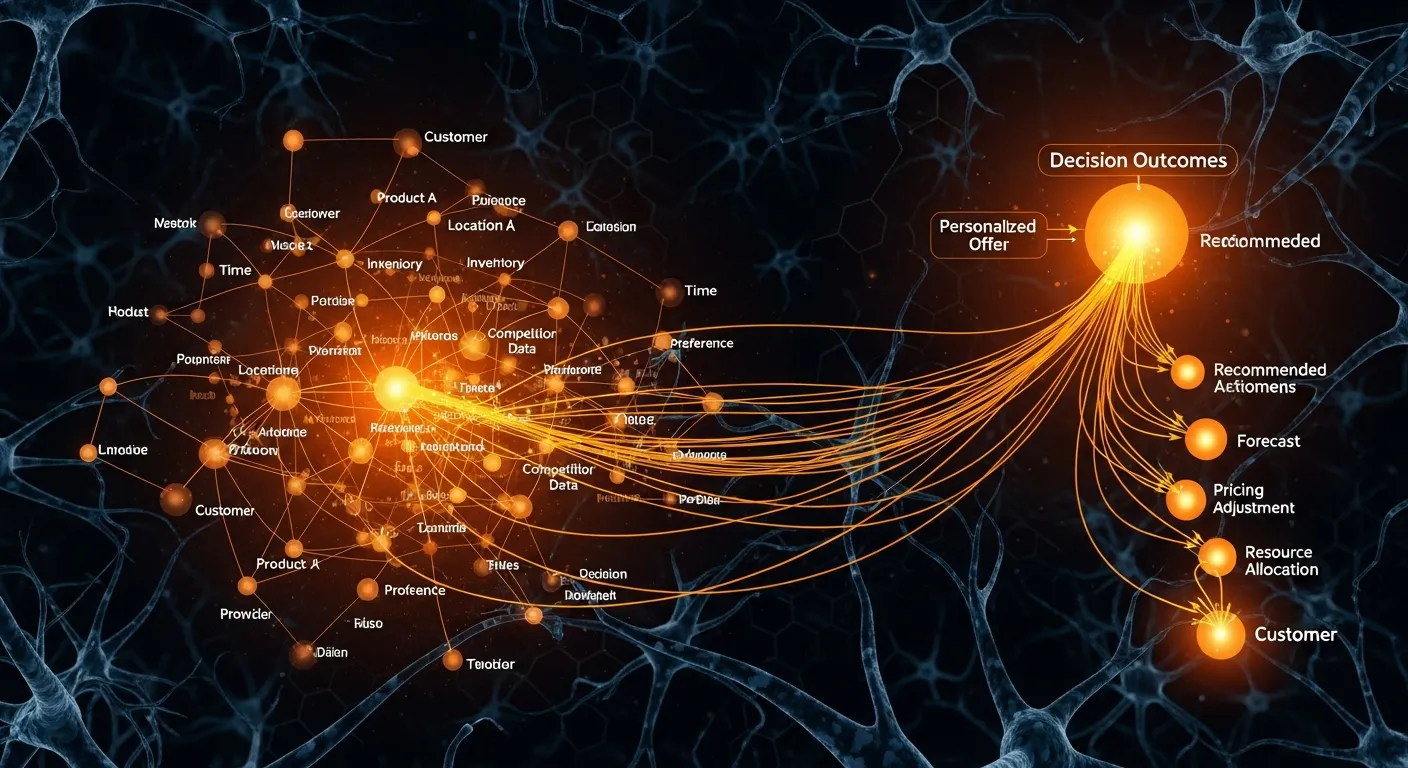
The solution isn't better prompting—it's context architecture. Companies that succeed with AI at scale build systems that feed business intelligence directly into their models. Instead of asking AI to guess, they create environments where AI operates with full knowledge of how the business actually works.
The Context Gap That Breaks Enterprise AI
Think about how your best employees make decisions. They don't just follow scripts. They remember past customer interactions, understand product relationships, and know when to bend rules based on business priorities. They operate with context.
AI models, even the most advanced ones, start every interaction from zero. They don't know that Customer A always needs expedited shipping or that Product B requires special handling in certain regions. They can't remember why your team made an exception last month or how similar situations were resolved before.
This context blindness creates several critical problems:
- Inconsistent decisions: AI gives different answers to similar questions because it lacks historical context
- Poor customer experience: Models can't personalize responses based on customer history or preferences
- Compliance risks: Without understanding business rules and exceptions, AI might suggest actions that violate policies
- Wasted human time: Teams spend more time correcting AI mistakes than they save from automation
The companies that crack this problem don't just improve their AI—they transform how their entire organization captures and uses knowledge.
Building Context Architecture: The Foundation Layer
Context architecture starts with understanding what your AI needs to know. This isn't about feeding more data into models—it's about creating structured knowledge that AI can actually use.
The foundation is entity mapping. Before AI can make smart decisions, it needs to understand the building blocks of your business. What counts as a customer versus a prospect? How do products relate to services? Which locations have special requirements?
Most companies have this information scattered across systems. Customer data lives in the CRM, product details sit in the PIM, and business rules exist in policy documents or employee heads. AI can't connect these dots without help.
Smart organizations create entity frameworks that define these relationships clearly. They map how customers connect to products, how products relate to services, and how all of these tie to business processes. This gives AI a structured understanding of the business landscape.
The next layer captures decision intelligence. This means documenting not just what happened, but why it happened. When your support team escalates a ticket, why did they choose that path? When sales approves a discount, what factors influenced that decision?
This decision layer becomes institutional memory. Instead of losing knowledge when employees leave or forgetting why certain exceptions were made, the organization builds a searchable history of business reasoning that AI can access and learn from.
The Memory System: How AI Learns Your Business
Traditional AI systems are stateless—they forget everything between interactions. But business decisions build on previous decisions. Customer relationships develop over time. Product strategies evolve based on market feedback.
Context architecture creates persistent memory for AI systems. This isn't just storing conversation history—it's building a living knowledge base that captures how your business operates and evolves.
The memory system tracks relationships and patterns. When a customer contacts support, the AI doesn't just see the current issue—it understands the customer's history, previous solutions that worked, and any special considerations for their account. When generating content, the AI knows your brand voice, approved messaging, and content that performed well with similar audiences.
This memory layer also captures exceptions and edge cases. Real businesses don't operate by rigid rules. There are always special situations that require judgment calls. By documenting these exceptions and the reasoning behind them, AI learns to handle similar situations appropriately.
The key is making this memory actionable. It's not enough to store information—the system needs to surface relevant context automatically when AI makes decisions. This requires intelligent retrieval that understands relationships, not just keyword matches.
Integration Strategy: Connecting Business Systems
Your business knowledge doesn't live in one place. Customer insights sit in your CRM, product data lives in multiple systems, and operational knowledge exists in various platforms. For context architecture to work, AI needs unified access to all these sources.
The goal isn't to replace existing systems or create massive data warehouses. Instead, successful implementations create integration layers that let AI access information across platforms while maintaining security and governance.
This integration strategy focuses on real-time connectivity. When customer information updates in your CRM, the context system reflects those changes immediately. When new products launch or policies change, AI systems adapt without manual updates.
Security becomes crucial at this layer. AI needs broad access to make informed decisions, but that access must be controlled and auditable. The integration layer enforces permissions, tracks access patterns, and ensures AI operates within appropriate boundaries.
Many organizations use API-first approaches that let different systems communicate without exposing sensitive data unnecessarily. This creates secure data flows that give AI the context it needs while maintaining enterprise security standards.
Governance and Control: Keeping AI Aligned
With great context comes great responsibility. When AI has access to comprehensive business knowledge, it can make more powerful decisions—but those decisions need oversight and control.
Governance frameworks define how AI can use context information. This includes setting boundaries on what decisions AI can make autonomously, what requires human approval, and how to handle edge cases that fall outside established patterns.
The governance layer also manages context quality. Not all information is equally reliable or current. The system needs to weigh different sources, flag outdated information, and ensure AI makes decisions based on the best available context.
Explainability becomes easier with context architecture. When AI makes a decision, it can point to the specific context factors that influenced that choice. This makes AI behavior more transparent and helps teams understand and trust automated decisions.
Continuous monitoring tracks how well the context system performs. Are AI decisions improving? Is the system learning from new situations? Are there gaps in context that need attention? This feedback loop helps organizations refine their context architecture over time.
Implementation Roadmap: Getting Started
Building context architecture doesn't happen overnight, but you can start with focused pilots that demonstrate value quickly.
Begin with a specific use case where context clearly matters. Customer support often works well because the value of historical context is obvious. Sales enablement is another good starting point because AI can immediately benefit from customer and product relationship data.
Start by mapping the entities and relationships that matter for your chosen use case. Document the key decision points and the information that influences those decisions. This creates a foundation you can build on.
Connect the most critical data sources first. You don't need perfect integration across all systems—focus on the sources that provide the most valuable context for your use case. Add more connections as the system proves its value.
Build feedback loops from day one. Track how context improves AI performance and where gaps still exist. Use this information to prioritize what context to add next and how to improve the system's effectiveness.
Plan for scale from the beginning. While you might start with one use case, design your context architecture to support multiple AI applications across the organization. This prevents having to rebuild everything when you expand.
The Strategic Advantage of Context-Aware AI
Organizations that master context architecture don't just improve their AI—they create competitive advantages that are hard to replicate. Their AI systems become extensions of their institutional knowledge, capturing and applying business intelligence that took years to develop.
This approach transforms AI from a tool that automates simple tasks into a system that augments human decision-making at scale. AI becomes capable of handling complex scenarios because it operates with the same context that experienced employees use.
The compound effect grows over time. As the context system captures more decisions, exceptions, and outcomes, AI becomes increasingly sophisticated in handling your specific business challenges. This creates a virtuous cycle where better context leads to better AI performance, which generates more valuable context.
Companies that invest in context architecture today are building the foundation for AI systems that truly understand their business. While competitors struggle with generic AI that requires constant human oversight, these organizations deploy AI that operates with institutional intelligence and business awareness.
The future belongs to AI systems that don't just process information—they understand context, remember decisions, and apply business intelligence automatically. Building that foundation starts with recognizing that the real challenge isn't prompting AI better, but creating environments where AI can think like your best employees.
Share this article
Join the newsletter
Get the latest insights delivered to your inbox.