What the Meta Verdict Means for Your Brand Strategy
A jury found Meta and YouTube negligent for addictive design. Here's what that ruling means for brands advertising on these platforms right now.
The Courtroom Just Changed Your Marketing Playbook
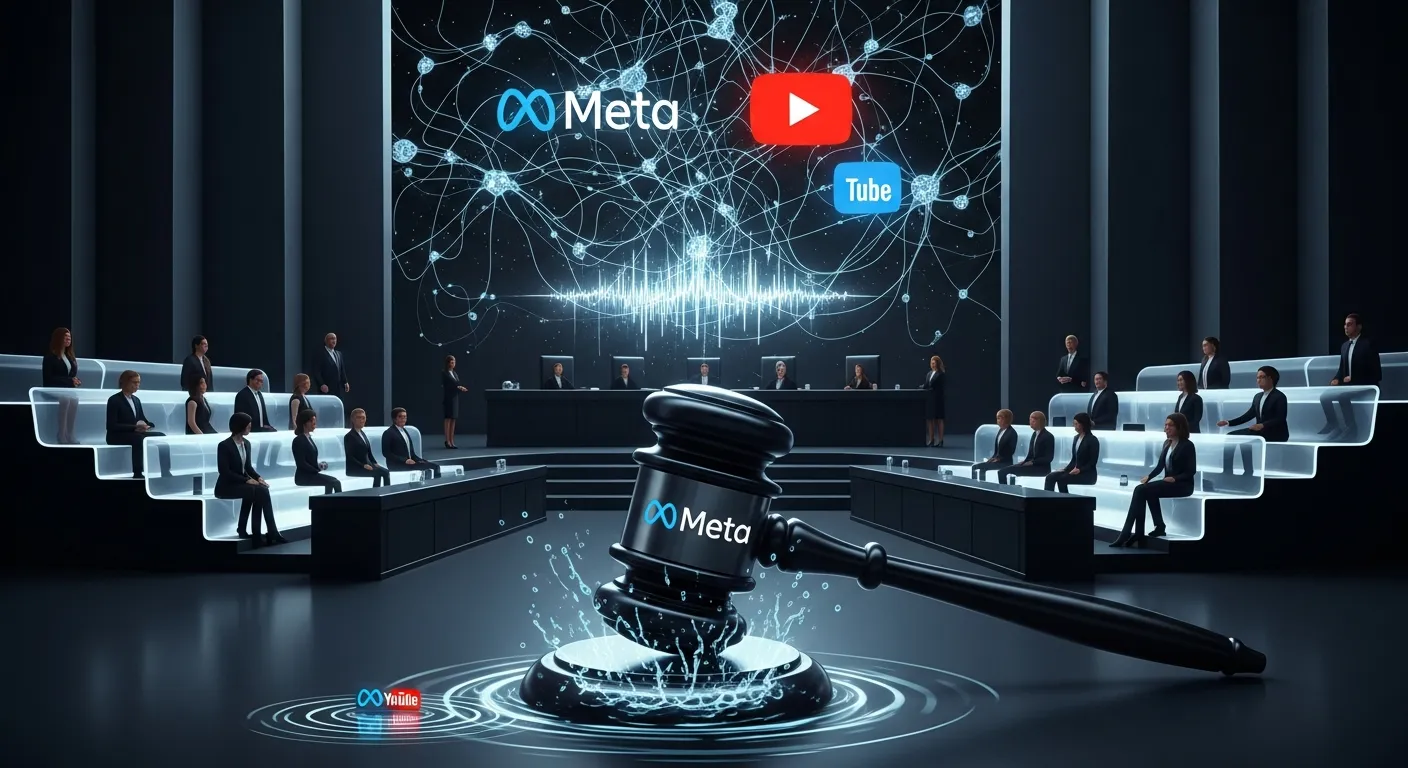
Something shifted in March 2026. A Los Angeles jury looked at infinite scroll, autoplay, and push notifications — features you've probably celebrated in campaign reports — and called them negligent design.
The target was Meta and YouTube. But the ripple effects reach every brand that spends ad dollars on those platforms.
This isn't a story about two tech giants losing a court case. It's a story about what your brand inherits the moment you place an ad on a platform that a jury has found harmful to its own users.
What the Jury Actually Decided
The case, known as K.G.M. v. Meta, started as one personal injury claim among thousands. A young woman — identified only by her initials to protect her privacy — began using YouTube at age six and Instagram at age nine. Both platforms set their own minimum age higher than that.
Over years of use, she developed anxiety, depression, body dysmorphia, self-harm behaviors, and suicidal ideation. TikTok and Snap settled before the trial reached a jury. Meta and YouTube stayed and fought.
Here's what made this case different from earlier attempts to hold platforms accountable. Plaintiff attorneys didn't argue about what content she saw. They argued about how the platforms were built to keep her watching. That distinction matters enormously.
Section 230 of the Communications Decency Act shields platforms from liability for user-generated content. By targeting the architecture — the design choices, not the posts — attorneys found a path around that shield entirely. The jury agreed. Meta was assigned 70% of the negligence. YouTube, 30%. Total damages reached $6 million, split between compensatory and punitive awards.
Both companies announced appeals. But the jury finding itself is already reshaping how legal teams, brand managers, and CX strategists think about platform partnerships.
The Platform-as-Channel Assumption Is Broken
For years, social media platforms have been treated like roads. Neutral infrastructure. You show up, place your ad, and the platform carries it to your audience. Whatever the platform does in the background isn't your problem.
That assumption just got challenged in open court.
When a jury frames platform features as designed artifacts with foreseeable harm potential, the platform stops being a neutral channel. It becomes a product. And products carry liability in ways that publishing channels don't.
Think about what that means for brand adjacency. Brand safety teams have spent years worrying about what content surrounds an ad. Does the ad appear next to something offensive? Does it fund harmful creators? Those are real concerns. But this verdict adds a new layer.
Now the question isn't just what's next to your ad. It's what the platform itself has been found liable for doing to its users. A brand that advertises heavily on a platform found negligent in design shares some of that reputational weight — whether it wants to or not.
As one digital marketing specialist put it, a brand now inherits more of the platform's trust problem the moment it appears there. That's not a legal argument. It's a consumer perception reality.
The Financial Stakes Are Growing Fast
The $6 million K.G.M. verdict is just the opening number. Over 6,000 active lawsuits are still pending against social media companies. The legal pipeline is long and getting longer.
Consider what happened in Kentucky. The Breathitt County School District — a rural Appalachian district with an annual budget of roughly $25 million — settled with Meta, YouTube, TikTok, and Snap for a combined $27 million. No admission of liability. No required platform changes. Just a check.
That settlement is now the reference point for 1,200 additional school district cases pending in federal court. The next trial centers on a Tucson, Arizona school district. Meanwhile, a New Mexico jury found Meta liable for violating state consumer protection laws just one day before the Los Angeles verdict, ordering $375 million in penalties.
Kentucky's attorney general is separately seeking $40 billion in civil penalties. These aren't fringe numbers. They're signals that multiple legal tracks are converging on the same conclusion: platform design that harms users creates financial exposure.
Brands don't face that exposure directly. But the platforms they advertise on do. And platforms under sustained legal and financial pressure don't behave the same way they did when the operating environment was stable.
Your Engagement Metrics May Be Measuring the Wrong Thing
Here's an uncomfortable question. The features the jury found negligent — infinite scroll, autoplay, push notifications — are the same features that drive the metrics most social media campaigns celebrate.
Time on platform. Scroll depth. Video completion rates. Notification click-throughs. These numbers look great in a campaign report. But if a jury has determined that the mechanisms producing those numbers were designed to exploit psychological vulnerability, what exactly are you measuring?
There's a meaningful difference between a user who engages with your content because they find it genuinely useful and a user who keeps scrolling because the platform is engineered to make stopping feel difficult. Both show up as engagement. Only one reflects actual customer intent.
CX teams that don't distinguish between these two things are building strategy on a shaky foundation. The verdict is a forcing function to ask harder questions about what your metrics actually represent.
Consider supplementing standard engagement data with indicators that reflect intent more clearly. Are users taking action after seeing your content, or just consuming it passively? Are they returning voluntarily, or being pulled back by notification design? Are conversion rates holding up when you look at users who came to the platform with a specific goal versus users who were just scrolling?
These questions don't have easy answers. But they're the right questions to be asking right now.
Younger Audiences Are Becoming a Planning Variable, Not a Constant
The legal and regulatory pressure on how platforms engage users under 18 is accelerating. That's not speculation — it's the direct consequence of the verdict and the thousands of cases still in the pipeline.
Brands that have built targeting strategies around continuous access to younger demographics need to treat that access as a variable, not a given. Restrictions on how platforms can engage minors are likely to tighten. Features that currently drive reach to younger audiences may be modified, removed, or subject to opt-in requirements that dramatically reduce their effectiveness.
This matters most for brands in categories where younger consumers are a core growth segment. If your CX strategy assumes that the current targeting environment for users under 18 will remain stable, the verdict gives you a concrete reason to revisit that assumption.
Building audience strategies that don't depend entirely on platform-driven engagement with younger users isn't just good legal hygiene. It's smart long-term planning.
What Brands Should Actually Do Right Now
The verdict doesn't require brands to stop advertising on Meta or YouTube. But it does require a more deliberate posture toward platform partnerships. Here's where to start.
First, review your platform contracts. Most brands accept standard terms without negotiation. Those terms were written in a different legal environment. An attorney familiar with digital advertising can help you understand what obligations you've accepted and where renegotiation might reduce your exposure. As one legal perspective suggests, it's far cheaper to do legal review proactively than to comply with later verdicts.
Second, audit your brand safety settings. Most platforms offer controls over where ads appear and what targeting parameters are in use. Many brands set these once and don't revisit them. Given the current legal climate, a fresh audit makes sense. Look specifically at settings related to audiences under 18 and placements adjacent to content flagged as sensitive.
Third, start building the case for supplemental metrics internally. The shift from compulsion-driven engagement data to intent-driven engagement data won't happen overnight. But starting the conversation now — before a reputational problem forces the issue — puts your team in a much stronger position.
Fourth, diversify your channel mix. Platforms under sustained legal pressure are unstable planning inputs. Brands that have built too much of their audience strategy around any single platform are exposed not just to reputational risk but to operational disruption if platform behavior changes rapidly in response to court outcomes.
One marketing director's advice captures the urgency well: review platform usage now, not after a reputational problem. The verdict has already happened. The question is whether your strategy reflects the new reality it created.
The Bigger Picture for CX Thinking
There's a broader shift happening here that goes beyond any single verdict. The relationship between brands, platforms, and users is being renegotiated — not just in courtrooms but in the minds of consumers who are paying attention to these cases.
Platform trust used to be something brands could assume. Users were on these platforms, so the platforms were trustworthy enough. That logic is weakening. When users see major platforms found negligent for harming young people, their relationship with those platforms changes. And so does their relationship with the brands they see advertising there.
CX strategy has always been about building genuine relationships with customers. The verdict is a reminder that those relationships don't exist in a vacuum. They exist on platforms with their own track records, their own legal histories, and their own design philosophies. What those platforms do to users reflects, at least partially, on the brands that choose to operate there.
That's the real strategic question the verdict raises. Not whether to keep advertising on Meta and YouTube — most brands will — but how to do it in a way that reflects a clear-eyed understanding of what these platforms are, what they've been found liable for, and what that means for the trust your customers place in you.
The brands that answer that question thoughtfully will be better positioned than the ones who wait for the next verdict to force the conversation.
Share this article
Join the newsletter
Get the latest insights delivered to your inbox.