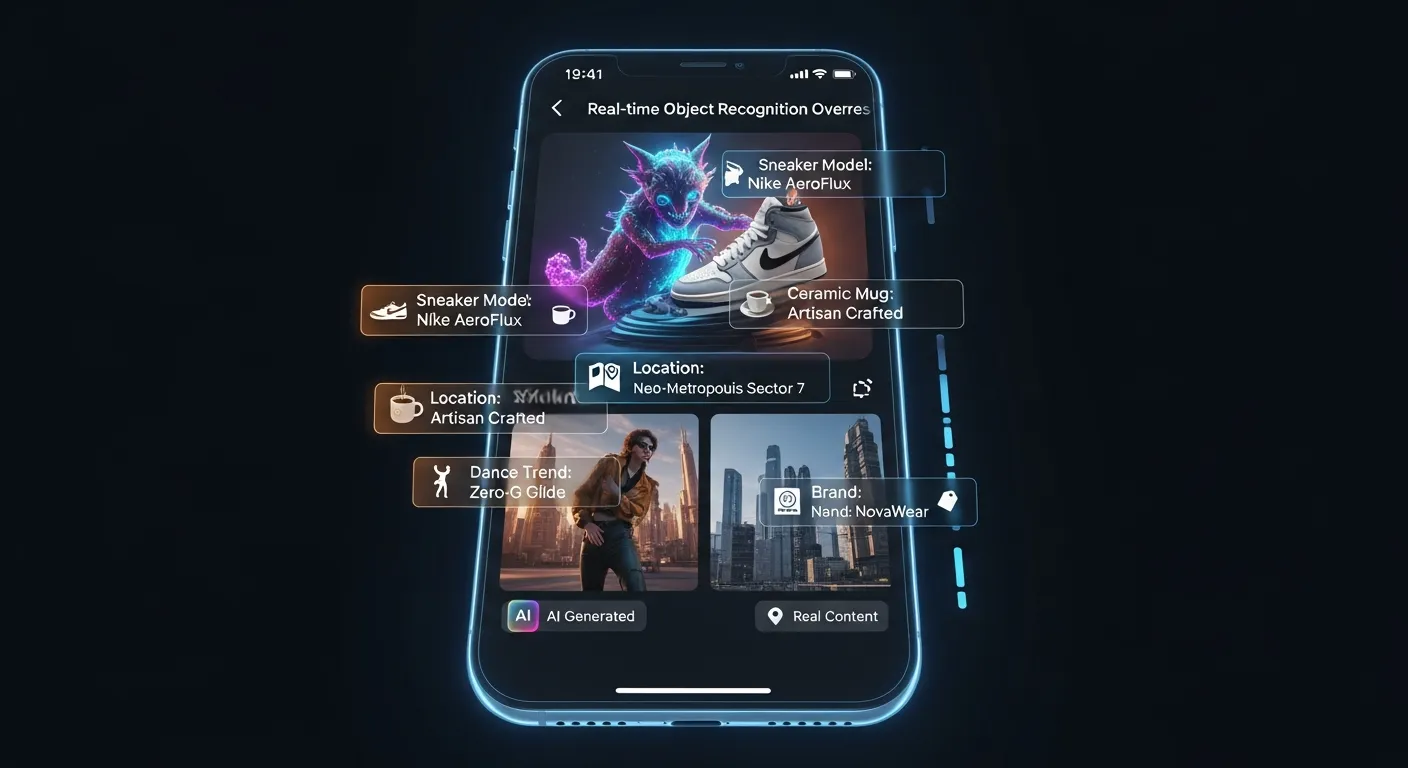
TikTok's AI Labels: What Brands Must Do Now
TikTok has labeled 3 billion AI videos. Half of consumers want brands to skip AI content altogether. Here's what that means for your marketing strategy.
The Feed Just Changed — Did Your Brand Notice?
Think about what you saw the last time you scrolled TikTok. Product demos. Founder stories. Testimonials. Now imagine a small label sitting on some of those clips that says, simply, "AI-generated."
That label changes everything about how you read the content. It's not just a tag — it's a signal that rewires your trust before you've even watched five seconds.
TikTok has already stamped that signal on more than 3 billion videos. The platform isn't slowing down. And if your brand is creating content with AI tools — or working with creators who do — you're already part of this story, whether you planned to be or not.
What TikTok's Labeling System Actually Does
TikTok's approach to AI content goes deeper than a simple badge. The platform uses a stack of tools working together. Content Credentials attach invisible metadata to files, tracking where a piece of content came from and how it was made. Creator labeling tools ask users to self-disclose when they've used generative AI. And TikTok's own watermarking technology can detect synthetic content even when creators don't flag it themselves.
There's also a newer feature worth understanding. TikTok is testing an AI-generated content control inside its Manage Topics settings. Users can slide a dial to see more or less AI content in their For You feed. That's a quiet but significant shift for marketers.
Here's why: if a portion of your audience turns that dial down, your AI-assisted content reaches fewer of them. Your creative choices now directly affect your distribution. The two things that used to be separate — how you make content and how many people see it — are now tied together.
This isn't just a platform policy. It's a new reality for how branded content performs.
The Trust Problem Brands Can't Ignore
Platforms don't build complex labeling systems for fun. They build them because something is breaking. And right now, what's breaking is consumer confidence in what they see online.
Gartner surveyed over 1,500 U.S. consumers and found that 68% regularly wonder whether content they see is real. Nearly as many — 61% — question whether the information they rely on for everyday decisions is actually reliable. Doubt has become the default setting people bring to their feeds.
That doubt has a direct cost for brands. The same research found that half of consumers say they'd rather buy from companies that don't use AI in customer-facing content. That's not a fringe opinion. That's a mainstream preference that your competitors are either responding to or ignoring.
And then there's this number: 78% of consumers say clear AI labeling is central to how much they trust a brand. Not a nice bonus. Central.
So the math is uncomfortable but clear. Consumers are already suspicious. They want transparency. And when they get it, their trust goes up. When they don't, it doesn't just stay flat — it erodes.
Why Labels Alone Won't Save You
Here's where the conversation gets more complicated. A label tells a viewer what's inside. It doesn't stop bad content from spreading. It doesn't slow down the flood of synthetic media filling feeds every hour.
Consider how algorithms actually work. Platforms reward content that generates strong reactions — shares, comments, saves. That dynamic doesn't care whether content is labeled or not. An AI-generated video that provokes outrage will still travel fast, with or without a disclosure badge. The label shifts responsibility to the viewer, but it doesn't change the incentive structure that rewards inflammatory content.
This creates a real tension for honest brands. You can label your AI content correctly and still be swimming in a feed full of synthetic media designed to inflame. Your transparent disclosure doesn't protect you from the credibility damage that happens when viewers become generally exhausted and suspicious of everything they see.
The implication? Labeling is necessary but not sufficient. It's a floor, not a ceiling. Brands that treat disclosure as the finish line are missing the bigger opportunity.
Where Authenticity Does the Selling
Not all content formats carry the same trust load. Some types of content work specifically because they feel real and witnessed — like something you stumbled upon rather than something a marketing team produced.
Think about product demos. Unboxing videos. Customer testimonials. Get-ready-with-me clips. These formats earn attention because they feel like a real person in a real moment making a real choice. That feeling is the product. When an AI label appears on that kind of content, it doesn't just add information — it changes the emotional read entirely.
That's not always bad. A brand that labels an AI-generated tutorial video honestly might actually gain points for transparency. But a brand that uses AI to simulate a customer testimonial and labels it only because the platform forced them to? That's a trust problem waiting to happen.
The formats where authenticity does the selling are the exact formats where provenance signals move audience perception the most. Marketers need to know which of their content types fall into that category. Those are the ones that deserve the most careful thinking about how and whether AI tools belong in the production process.
Rethinking Your Creative Review Process
Most creative review processes end at two questions: Is this on-brand? Is this legally safe? Those two questions aren't enough anymore.
A third question now belongs in every review: What does the provenance of this content signal to the viewer, and does that signal help or hurt us?
That question has to be answered by people who understand the customer — not just the legal team or the platform compliance team. It's a customer experience question dressed up as a production question.
Here's a practical way to think about it. Before any AI-assisted content goes live, your team should be able to answer three things clearly. First, does this content carry an AI label, and is that label accurate? Second, does the format depend on feeling authentic and witnessed — and if so, does AI use undermine that? Third, if a viewer sees this label, does it build trust or create doubt?
If you can't answer all three confidently, the content isn't ready. That's not a creative limitation. It's a customer experience standard.
The Audience Control Problem Marketers Underestimate
TikTok's AIGC dial is worth spending more time on, because most marketers haven't fully processed what it means.
When a platform gives users control over what types of content fill their feed, it creates audience segments that didn't exist before. Some users will actively seek out AI content. Others will filter it out almost entirely. And a large middle group will leave the default setting and absorb whatever the algorithm serves.
For brands, this means your AI-generated content now has a built-in reach ceiling among users who've opted down. It also means your non-AI content may get a quiet boost among those same users, because it's the kind of content they've signaled they want to see more of.
This isn't a reason to stop using AI tools. It's a reason to be strategic about which content you build with them. High-reach awareness content might benefit from staying human-produced, while AI tools might work better behind the scenes — in research, scripting, or editing — rather than in the final output that viewers see and label-check.
Building a Disclosure Strategy That Actually Works
Transparency without strategy is just confession. The goal isn't to disclose everything and hope for the best. It's to build a disclosure approach that strengthens your brand's relationship with its audience.
Start with an audit. Go through your recent content — both brand-produced and creator-partner content — and identify what was made with generative AI tools. Look at whether those pieces carry accurate labels. Look at whether any of them are in formats where an AI label would shift audience perception in a way you didn't intend.
Then look at your creator partnerships. If you work with influencers who use AI tools, their labeling practices reflect on your brand. A creator who doesn't disclose AI use on sponsored content creates a trust liability for you, not just for them. Build disclosure expectations into your creator briefs and partnership agreements.
Finally, think about framing. There's a difference between a label that feels like a legal disclaimer and one that feels like an honest note from a brand that respects its audience. The brands that will handle this best won't just comply with labeling requirements — they'll communicate about their AI use in a way that feels intentional and human.
Viewers can tell the difference between a brand that got caught and a brand that chose to be upfront. That difference is where trust either grows or disappears.
What Comes Next for Brands on TikTok
TikTok's labeling system is still evolving. The in-app AI literacy hub the platform launched is a sign of where things are heading — toward a feed where content provenance is a standard, visible layer of the experience, not a footnote.
Other platforms are watching. What TikTok builds here will likely influence how Instagram, YouTube, and others handle AI disclosure in the months ahead. Brands that figure out their approach now won't just be ahead on TikTok — they'll be building a muscle that applies across every platform they use.
The brands that treat this moment as a compliance headache will fall behind. The brands that treat it as a chance to build genuine credibility with their audience will come out ahead. That's not a prediction about AI. It's a prediction about trust — and trust has always been the thing that separates brands people choose from brands people tolerate.
Your audience already knows AI content exists. They're not asking you to pretend otherwise. They're asking you to be honest about it. That's a bar most brands can clear — if they decide to.
Share this article
Join the newsletter
Get the latest insights delivered to your inbox.