Why AI Connectors Could Change How Teams Manage Content
Kontent.ai's new zero-code AI connectors link its Aiko agent to tools like Asana and Notion. Here's what that means for your content team.
The Real Problem with Content Operations Today
Most content teams don't struggle with writing. They struggle with everything around writing. Who approved this? Where's the brief? Has the legal team signed off? Is this task in Asana or Jira?
That constant switching between tools eats hours every week. It's not glamorous to talk about, but it's one of the biggest drains on content team productivity. And up until now, most AI tools haven't done much to fix it.
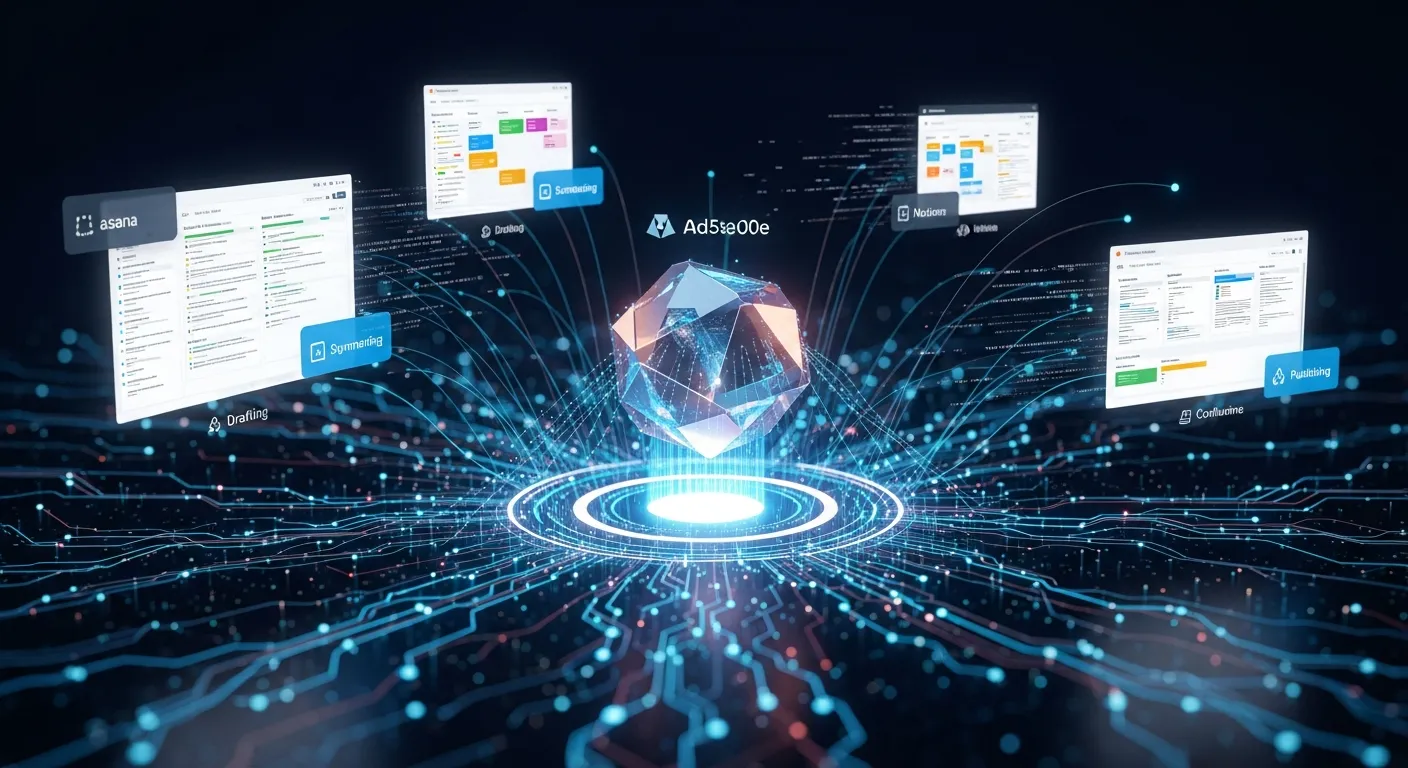
That's the gap Kontent.ai is trying to close with its new AI Connectors feature. The company just linked its AI agent, Aiko, to a set of popular enterprise apps — including Asana, Atlassian tools, Notion, and Peec AI. The idea is simple: your content team stays in one place, and the AI handles the coordination across all those other systems.
What Zero-Code Connectors Actually Mean
The phrase "zero-code connectors" gets thrown around a lot. But what does it really mean for a content manager who isn't a developer?
In short, it means no one has to build a custom integration. No API calls, no developer tickets, no waiting weeks for IT to connect two platforms. The connectors work out of the box, which is a big deal for mid-size teams that don't have engineering resources to spare.
Once connected, Aiko can pull information from those tools directly. Say your team tracks editorial deadlines in Asana. Aiko can read those tasks, understand priorities, and factor that context into what it does inside the CMS. It can also push updates back — changing a task status, flagging a reviewer, or moving a workflow forward — without anyone leaving the Kontent.ai interface.
That's not just automation. That's coordination. There's a meaningful difference between those two things.
Automation vs. Coordination: Why It Matters
Automation handles repetitive steps. Coordination manages the flow between people, systems, and decisions. Most tools are good at the first one. Very few handle the second.
Think about what happens when a piece of content needs approval from three different stakeholders across two time zones. Someone has to track who's seen it, who hasn't, and what's blocking the next step. That's coordination work. It's often invisible, and it usually falls on a senior team member who has better things to do.
Aiko's connectors are designed to take on that coordination layer. By pulling context from project management tools and acting on it automatically, the agent can keep things moving without a human playing traffic cop. Ian Norton, VP of Marketing at Kontent.ai, put it plainly: "Most AI tools help people create content faster. Our vision is to help organizations operate content more effectively."
That's a subtle but important distinction. Speed of creation is one metric. Operational efficiency across the full content lifecycle is a much bigger one.
Who This Is Built For — And Who Should Pay Attention
Kontent.ai has built its customer base in sectors where compliance and governance aren't optional. Healthcare, financial services, insurance, and government are all areas where content has to be accurate, traceable, and auditable. That's not a coincidence.
The company holds ISO/IEC 42001 certification for AI management systems — a relatively new standard that specifically addresses how organizations govern AI. That kind of certification matters in regulated industries where "the AI did it" isn't an acceptable answer when something goes wrong.
More than 60 organizations are already using the Agentic CMS capabilities that Aiko is built on. That's a small but meaningful signal that enterprise teams are starting to move past the pilot stage with this kind of technology.
For content leaders in less regulated industries, the connectors still offer real value. Any team juggling multiple project management tools alongside a CMS will recognize the friction these connectors are trying to remove. The question isn't whether the problem is real — it's whether the solution fits your stack.
The Bigger Shift: From CMS to Content Operating System
There's a broader trend worth naming here. The CMS market is quietly going through a significant change. For years, a CMS was where you stored and published content. The workflows, approvals, and coordination happened in other tools. The CMS was the destination, not the hub.
Kontent.ai is clearly betting that model is outdated. By building an agent that reaches out into Asana, Jira, and Notion, they're positioning the CMS as the central nervous system for content operations — not just a repository.
That's a real shift in how content platforms are being designed. And it reflects a broader change in what enterprise buyers actually want from software. They're tired of managing integrations. They want fewer tools that do more, not more tools that require constant stitching together.
Kontent.ai launched its Agentic CMS platform in late 2025, and since then the product cadence has been aggressive. AI-powered SEO and accessibility-compliant interfaces followed. Expert Agents — AI agents that require human approval before publishing — were added to give teams a governance layer. The AI Connectors are the latest piece of that puzzle.
The company also brought in a new CEO, Mark Greenaway, in April with a specific mandate: shift AI's impact from content creation to operational efficiency. That leadership change signals that the internal strategy isn't just about features — it's about repositioning what the entire platform is for.
What Should Enterprise Teams Actually Do With This?
If you're evaluating tools like this, a few things are worth thinking through carefully.
First, map your actual friction points before you get excited about features. Where does coordination break down on your team? Is it approvals? Deadline tracking? Handoffs between content and legal? If the answer is "all of the above," a tool like this might genuinely help. If your bottleneck is something else — like content strategy or brand consistency — connectors won't move the needle.
Second, think about governance before you think about speed. Agentic AI tools that act across systems can create audit trail problems if they're not set up carefully. Kontent.ai has built in permissions models and audit-log attribution, which is the right instinct. But your team still needs to understand what the agent is doing and why. Treat AI connectors like a new team member: give them clear boundaries and check their work until you trust the output.
Third, evaluate the integration depth, not just the integration list. Connecting to Asana is one thing. Reading the right tasks, understanding priority levels, and taking the right actions is another. Before committing, run the connectors against your actual workflows — not a demo environment — to see how they perform under real conditions.
Finally, consider the compounding effect over time. The productivity gain from any single automation is usually modest. The real value shows up when a dozen small friction points are removed at once, and your team's cognitive load drops significantly. That's harder to measure upfront, but it's often where the biggest returns come from.
A New Standard for Content Infrastructure
The content management space has been talking about AI for years. What's changing now is that AI is moving from a feature inside the CMS to an agent that operates across the entire content stack.
That's a fundamentally different kind of product. It's not about generating better first drafts or auto-tagging assets. It's about removing the invisible work that slows content teams down — the coordination, the status updates, the context-gathering that nobody tracks but everyone feels.
Kontent.ai's AI Connectors are a concrete step in that direction. Whether they deliver on the promise depends on how well the integration holds up in production environments, how much governance enterprises can actually configure, and whether teams are willing to trust an AI agent with cross-system coordination.
The early signals are worth watching. More than 60 organizations are already in the ecosystem. The company has a clear strategic direction and the certifications to back it up in regulated industries. And the problem they're solving — fragmented tools, manual coordination, constant context switching — is real and widely felt.
For content leaders thinking about where to invest in infrastructure, this is the kind of development worth tracking closely. The tools that win the next few years won't just help teams create content. They'll help teams run content operations like a well-oiled machine.
Share this article
Join the newsletter
Get the latest insights delivered to your inbox.