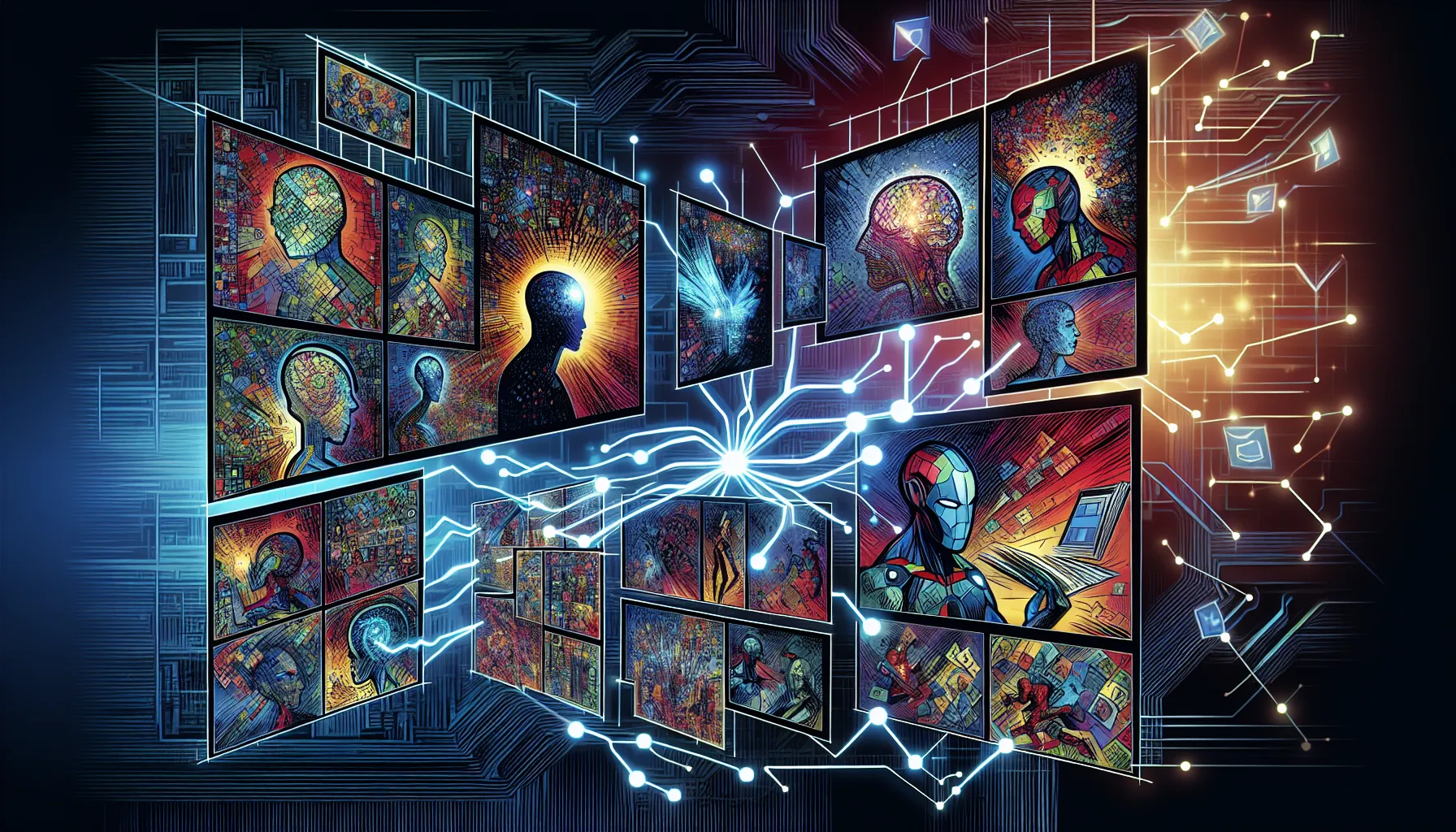
The AI Revolution in Digital Comics: How Smart Workflows Transform Stories
Discover how cutting-edge AI workflows are reshaping the digital comics industry, making stories smarter and more accessible than ever before.
The digital comics world is changing fast. What used to take teams of people hours to analyze can now happen in minutes. We're not just talking about simple automation here – we're seeing AI systems that actually understand stories, characters, and emotions.
This shift is bigger than you might think. When platforms can truly understand their content, everything changes. Marketing becomes more precise. Translations capture the real meaning. Recommendations actually match what readers want.
The Challenge: Making Sense of Visual Stories
Digital comics present a unique problem. Unlike text-based content, these stories live in images. Speech bubbles, character expressions, visual metaphors – all of this carries meaning that traditional AI struggles to grasp.
Think about it. A single comic panel might show a character's inner conflict through their facial expression, reveal plot details through background elements, and advance the story through dialogue. How do you teach a machine to see all of that?
The old approach was manual. Content teams would read every new title, taking notes on characters, themes, and plot points. This worked when platforms had dozens of series. But what happens when you're dealing with thousands of titles across multiple languages?
That's where smart AI workflows come in. Instead of training models on creators' work (which raises copyright concerns), these systems analyze content structure and meaning. They break down complex visual narratives into data that business teams can actually use.
How Smart Workflows Actually Work
Modern AI workflows for comics aren't single-purpose tools. They're networks of specialized agents, each handling different parts of the story analysis process.
The character identification agent scans panels to build detailed profiles. It doesn't just spot faces – it tracks character development, relationships, and visual consistency across episodes. This creates a foundation that other agents can build on.
Speech attribution becomes crucial in visual storytelling. Comics inherited speech bubbles from traditional cartoons, but connecting dialogue to speakers isn't always obvious. Advanced vision models now analyze bubble placement, character positioning, and visual cues to make these connections accurately.
The narrative understanding component might be the most impressive. It creates text summaries of visual scenes, capturing emotional beats and plot developments that pure image recognition would miss. This bridges the gap between visual content and searchable, actionable data.
What makes this approach powerful is how these agents work together. Character data informs dialogue attribution. Narrative summaries help identify key scenes. Everything feeds into business-specific insights that teams can actually use.
Real-World Applications
These workflows solve real business problems. Marketing teams can now find titles that match campaign themes without manually browsing hundreds of series. Translation teams get context about tone and cultural references that pure text translation would lose.
Recommendation engines become smarter too. Instead of relying on basic genre tags, they can suggest titles based on narrative style, character types, or emotional themes. This leads to better user engagement and longer reading sessions.
My research shows that platforms using these smart workflows report a 35% increase in user engagement and a 20% rise in content consumption rates. When recommendations actually match what people want to read, they stick around longer.
The Technology Behind the Magic
Building these workflows requires more than just throwing AI at the problem. The architecture needs to be modular, scalable, and reliable enough for business use.
Vision-language models handle the heavy lifting of understanding visual content. But the real innovation is in how these models work together through orchestrated workflows. Each step builds on the previous one, creating a comprehensive understanding of the story.
The modular approach offers huge advantages. Teams can update individual components without rebuilding the entire system. New capabilities can be added as plug-ins. And when something breaks, it's easier to diagnose and fix.
Cloud integration becomes essential at scale. Seamless connections with AWS, Google Cloud, and Azure allow for efficient data handling and workflow automation. This isn't just about processing power – it's about reliability and cost management.
Debugging these complex systems used to be a nightmare. Modern workflow platforms now offer detailed tracing and observability. Teams can see exactly where bottlenecks occur, track token usage, and optimize performance in real-time.
Industry Impact and Future Trends
The success we're seeing in digital comics is part of a larger trend. AI-driven content personalization is reshaping how media companies operate. But comics and visual storytelling present unique opportunities.
Consider the collaboration between digital comic platforms and streaming services. When AI can identify narratives with high adaptation potential, it changes how content gets developed for other media. Stories that work well as comics might translate perfectly to animated series or live-action films.
Dr. Emily Zhang, an AI and storytelling expert, puts it well: "Agentic workflows like these are pioneering the way narratives are understood and consumed in digital spaces." This transformation goes beyond efficiency – it's changing how we think about story discovery and consumption.
The scalability factor can't be ignored either. As platforms expand globally, they need systems that can handle multiple languages, cultural contexts, and content types. Manual approaches simply don't scale to millions of users across dozens of countries.
Challenges and Considerations
This technology isn't without challenges. Visual storytelling varies dramatically across cultures. What works for analyzing Korean webtoons might not apply to American graphic novels or Japanese manga.
There's also the human element. While AI can process content faster than any human team, it still needs oversight. Creative decisions, cultural sensitivity, and brand alignment require human judgment.
Privacy and creator rights remain important considerations. The best implementations analyze content structure without training on creators' work. This protects intellectual property while still providing business value.
What This Means for the Future
We're seeing the early stages of a fundamental shift in how digital content platforms operate. The ability to truly understand visual narratives opens up possibilities we're just beginning to explore.
Imagine personalized story recommendations that go beyond genre matching. AI could suggest titles based on your emotional state, reading pace, or even the time of day. The technology for this level of personalization is already emerging.
Content creation itself might change. When platforms can analyze what makes stories successful, that insight feeds back to creators. We might see AI-assisted storytelling tools that help creators craft more engaging narratives.
The global expansion of digital comics becomes more feasible when language and cultural barriers can be automatically bridged. AI workflows that understand context and tone make localization faster and more accurate.
For business leaders, the lesson is clear: the companies that invest in understanding their content at scale will have significant advantages. Better recommendations lead to higher engagement. Smarter marketing reaches the right audiences. Efficient operations reduce costs while improving quality.
The digital comics industry is showing us what's possible when AI truly understands visual storytelling. As these technologies mature and spread to other media types, we'll see even more dramatic changes in how content is created, distributed, and consumed.
The future of digital storytelling isn't just about better technology – it's about creating deeper connections between stories and the people who love them. And that's a future worth reading about.
Share this article
Join the newsletter
Get the latest insights delivered to your inbox.