
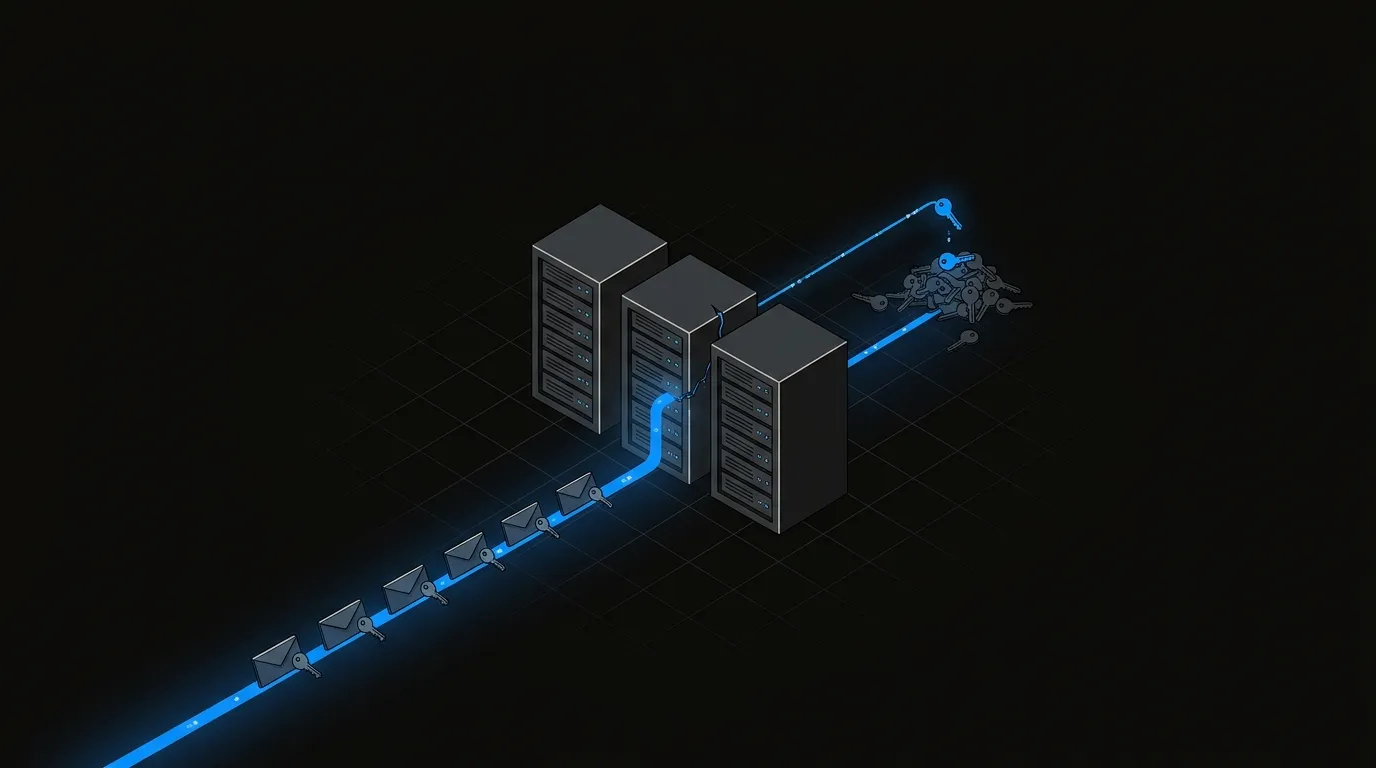
Security firm Dragos sent roughly 2 million AI requests stuffed with fake credentials to AI providers, and caught attackers inside at least three of them stealing user data. If your company sends prompts to whichever inference provider is cheapest, you're making a security decision. It should get the same review as any other vendor that holds your keys.
The tests ran from July through November 2026, The Decoder reported on Sunday. None of the three compromised providers knew anything was wrong until Dragos told them. In the largest incident, attackers harvested hundreds of AWS keys. Some came from requests the provider had rejected before processing them, so a request could fail and its key still get stolen.
The attackers moved fast. In some cases they tested stolen keys within hours, searched S3 storage, and tried to set up persistent access. One used an AI-powered attack tool called ARTEX. In another case, someone on a home internet connection in France tried to log in over SSH with passwords pulled from intercepted requests.
How a prompt ends up in a stranger's logs
Inference is the step where a model answers your request. Routers like OpenRouter give developers one API for models from many companies, then pass each request to a pool of providers, sometimes across several hops. Dragos says every hop can read the whole request and the whole response. Some routers work as open marketplaces where the cheapest provider gets the traffic.
Dragos says marketplace resellers also read customer requests, and they didn't need to exploit any weakness to do it. Listing a model at the lowest price and turning on logging was enough. For requests to MiniMax models on OpenRouter, providers including Novita, AtlasCloud, and StreamLake sat in the middle.
Privacy promises didn't hold up well either. Settings like Zero Data Retention (ZDR), the flag that's supposed to mean a provider keeps nothing, were often ignored. Dragos says a Chinese AI lab accessed its secret test URLs in more than half of all requests, even ones that went through US providers. Major US providers broke their own policies too, and one was still crawling a test URL more than two months after a single request. One secret link turned up in an internal chat on Feishu (Lark outside China) 24 days after the request. It was opened within two minutes on three computers and three phones in Beijing and Shanghai.
OpenRouter removed three providers from its platform and revoked ZDR approval for 125 endpoints, partly because of the findings and partly as a precaution. It also emailed affected users to warn that third parties may have read requests sent to MiniMax models. Affected providers including Novita, Phala, and Together have published preliminary security reports, though not every affected provider has. The Decoder's report doesn't name the compromised providers, the three OpenRouter removed, the Chinese lab, or the US providers that broke their policies.
Price picked the vendor, so nobody reviewed it
Most companies would never hand AWS keys to a vendor nobody had vetted. Yet that's roughly what happens when a developer pastes an error log into a prompt, or an agent pulls a config file into its context, and a router sends it to the lowest bidder. That bidder never crosses the desk of procurement or security. HD Moore, Dragos's Chief Research Officer, said: “None of this means that you should stop using AI services. It does mean that where your prompts go is a decision, and if you don’t make it, the lowest price will make it for you.”
I'd go a step further. Whoever serves your prompt is handling your data and, sometimes, your secrets. It belongs on the same list as your payroll vendor and your cloud host, with the same questions asked before anyone sends it traffic.
A fair skeptic would say the fix is simpler. Keep secrets out of prompts and no provider can leak them. Dragos itself warns against sending credentials to intermediaries, and I agree with that advice. I don't think it's enough. Nobody can promise that no pasted log or agent context will ever carry a password, and the rejected requests show a key can leak before the model does anything at all. The same skeptic could point out that major US providers, the kind a review would likely approve, still broke their own policies. That's a real hit to my argument. To me it says review has to include testing, because a signed policy isn't proof.
Start by finding out where your AI traffic goes. Ask engineering whether any app or internal tool calls a router like OpenRouter, and whether the provider is pinned or picked on price. If anyone used MiniMax models through OpenRouter, check for its warning email and rotate any credential that might have been in those requests.
Then put the same question to your software vendors. Every SaaS tool with an AI feature sends your data to some inference provider. Ask which one, how many hops sit in between, and whether ZDR is enforced or just switched on in a settings page. After this research, 'we enabled zero retention' shouldn't end the conversation.
And take Dragos's own advice by planting canary tokens, which are fake credentials that give themselves away the moment someone uses them. They turn a privacy promise you have to trust into one you can test.
The next real evidence will come from the providers that haven't published their reports yet, and from whether those reports say how long attackers were inside and what they took. Watch the routers too. If marketplaces keep sending traffic to the lowest bidder by default, the incentive Dragos found stays in place.
I'd bet that within the next few quarters, vendor security questionnaires start asking which inference providers a product routes through, and routers start selling vetted, pinned provider pools as a premium option. If someone asked you today which companies can read your team's prompts, could you name them?