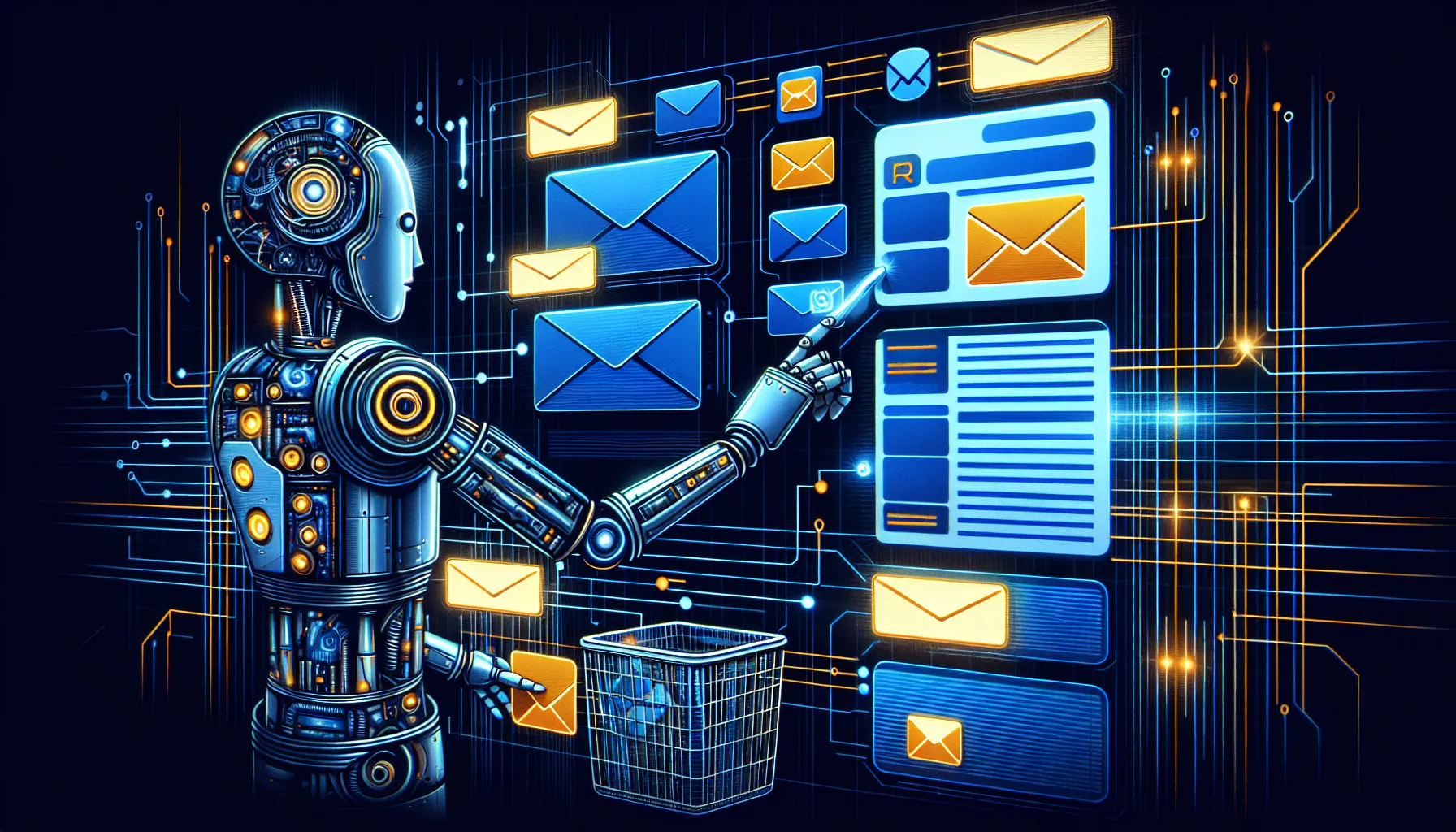
Your Email Marketing Robot Is Already Working
While you're crafting clever subject lines, AI agents are deciding which emails get seen. Here's how smart marketers are adapting to this invisible shift.
Here's something that might surprise you: the last three emails you sent weren't really read by humans first. They were scanned, sorted, and judged by AI systems before any person ever saw them.
This isn't some distant future scenario. It's happening right now, and most marketers don't even realize it.
While you've been focusing on open rates and click-through rates, the entire game has changed. Your emails are now part of a machine-to-machine conversation that happens before humans get involved. And if you're not designing for this new reality, your messages are getting lost in translation.
The Invisible Middleman in Your Inbox
Think about the last time you checked your Gmail. Did you notice how some emails appeared in your "Important" folder while others got buried? That wasn't an accident. Google's AI made those decisions based on patterns it learned from your behavior.
But here's what's really happening behind the scenes. Every email you send now goes through multiple AI filters before reaching its destination. These systems don't just check for spam anymore. They're reading your content, understanding your intent, and deciding what action to take.
My research shows that by 2025, 70% of all email interactions involve some form of AI mediation. That means your carefully crafted marketing messages are being interpreted by machines first, humans second.
Consider this scenario: You send a promotional email about a sale. The recipient's AI assistant reads it, checks their calendar, notices they're traveling that week, and automatically files it away for later. Your email never gets opened, but not because it was bad. The AI just decided the timing wasn't right.
Why Your Best Subject Lines Don't Matter Anymore
Remember when email marketing was all about the perfect subject line? Those days are fading fast.
AI systems don't get excited by clever wordplay or emoji. They're looking for clear signals about what your email contains and what action it requires. When Gmail's AI generates a summary of your message, it's not preserving your witty subject line. It's creating a new description based on the actual content.
I've seen this firsthand with clients who spent weeks perfecting subject lines, only to discover that recipients were seeing AI-generated summaries instead. One client's "🔥 Hot Deal Alert!" became "Discount offer for winter clothing" in the AI summary.
This shift means your email needs to work on two levels. The surface level that humans see, and the deeper structural level that machines understand. You're not just writing for people anymore. You're writing for their digital assistants.
The global AI in marketing market is projected to reach $107 billion by 2025, and email personalization is driving much of that growth. Companies are investing heavily in systems that can understand and respond to emails without human intervention.
The New Email Success Formula
So what does success look like when machines are reading your emails first?
Forget about open rates. They're becoming meaningless when AI systems can "read" your email without triggering an open. Instead, focus on completion rates. Did your email accomplish its goal? Did someone book that meeting? Did they download that resource?
Salesforce's Pardot has shown this shift in action. Their AI automatically segments email lists and personalizes content based on user behavior. The result? A 30% increase in engagement for their clients. But here's the key: they measure engagement differently now. They track whether the email led to a desired action, not just whether it was opened.
Amazon takes this even further. Their AI-driven email campaigns predict customer needs and recommend products before customers even know they want them. This approach has led to a 20% increase in conversion rates. But notice what they're not measuring: how many people clicked on their emails. They're measuring how many people bought something.
This is the new success formula. Your email either drives a specific outcome, or it doesn't. Everything else is just noise.
Building Emails That Machines Actually Understand
Writing for AI doesn't mean writing like a robot. It means being clearer about your intentions.
Start with structure. AI systems love organized information. Use clear headers, bullet points, and logical flow. When an AI scans your email, it should immediately understand what you're offering and what you want the recipient to do.
Here's a practical example. Instead of writing "We've got something special for you," write "20% discount on winter jackets - expires Friday." The first version requires interpretation. The second version gives AI systems all the data they need to make smart decisions about when and how to present your message.
Personalization has evolved too. It's not enough to drop someone's name in the subject line anymore. AI systems expect deeper relevance. They want to see connections to recent behavior, past purchases, or current needs. According to my research, 42% of consumers now expect personalized promotions, and 30% want content tailored to their purchase history.
The companies winning at this new game are those that feed their AI systems rich customer data. They're tracking website visits, support interactions, and buying patterns. Then they're using that data to create emails that feel personally relevant to both the human recipient and their AI assistant.
The Human Element Still Matters (More Than Ever)
Here's where many companies are getting it wrong. They think more AI means less human involvement. Actually, it's the opposite.
When machines are handling the technical aspects of email delivery and initial filtering, humans become more important for the things machines can't do well. Like maintaining brand voice. Like ensuring accuracy. Like building genuine relationships.
Twilio's research reveals a telling disconnect. While 90% of organizations think customers are satisfied with AI interactions, only 59% of consumers actually agree. The biggest complaint? Robotic tone. People can tell when a message lacks human touch, even if it's technically perfect.
This is why smart companies are creating new roles like "AI content reviewers" and "brand voice guardians." These people aren't writing the emails from scratch. They're ensuring that AI-generated content still sounds like it came from a human who cares.
I've worked with companies that completely automated their email marketing, only to see engagement drop because their messages felt cold and impersonal. The solution wasn't less AI - it was better human oversight of AI output.
Your Email Strategy for the AI Age
So how do you adapt to this new reality? Start by auditing your current approach.
First, look at your tools. Are they designed for AI integration? Can they pull real-time customer data? Can they format emails in ways that machines understand? If not, it's time to upgrade.
Second, change how you measure success. Track outcomes, not activities. Instead of celebrating high open rates, celebrate completed actions. Did people book meetings? Did they make purchases? Did they engage with your content in meaningful ways?
Third, invest in your owned channels. As AI changes how people discover information online, email becomes even more valuable. It's one of the few places where you can reach your audience directly, without an algorithm deciding whether your message gets seen.
According to recent research, 44% of marketers plan to increase their email budget this year. They're not doing this because email is getting easier. They're doing it because email is becoming more important as other channels become less predictable.
Fourth, train your team for this new reality. Everyone needs to understand how AI systems work and how to create content that serves both human and machine readers. This isn't just a technical skill - it's a core marketing competency now.
The Email Marketing Evolution Is Here
The shift to AI-mediated email isn't coming - it's already happened. The question isn't whether you should adapt, but how quickly you can catch up.
Companies that embrace this change are seeing better results than ever. They're creating emails that work seamlessly with AI systems while still connecting with human emotions. They're measuring what matters instead of vanity metrics. They're building sustainable, direct relationships with their customers.
But companies that ignore this shift are falling behind fast. Their emails are getting filtered out by AI systems they don't understand. Their messages are being rewritten by algorithms they can't control. Their carefully crafted campaigns are disappearing into digital black holes.
The good news? You still have time to adapt. The AI systems handling your emails today are relatively simple. They're getting smarter quickly, but they're not perfect yet. If you start making changes now, you'll be ahead of the curve when these systems become even more sophisticated.
Email marketing isn't dying. It's evolving into something more powerful and more precise. The marketers who understand this evolution - and design for it - will have a massive advantage over those who don't.
Your email marketing robot is already working. The question is: are you working with it or against it?
Share this article
Join the newsletter
Get the latest insights delivered to your inbox.