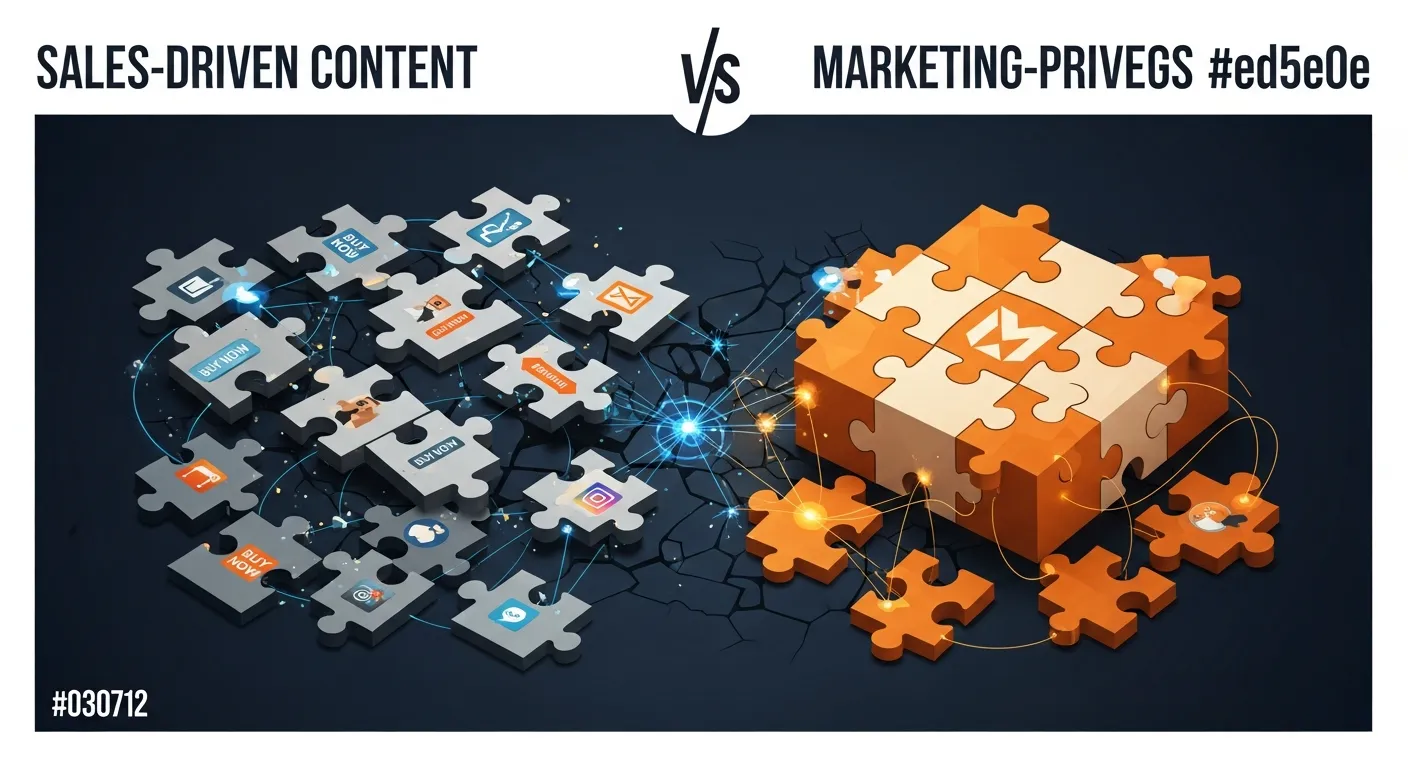
The Hidden Cost of Letting Sales Control Your Content
When sales teams dictate content creation, businesses create reactive, disconnected pieces that fail to build lasting value or guide prospects effectively.
Picture this: Your sales team comes to you on Monday morning with an urgent request. A prospect asked about security features during Friday's demo, and now they need a detailed blog post by Wednesday. Sound familiar?
This scenario plays out in companies everywhere. Sales hears something in the field, flags it as important, and suddenly content creation becomes a fire drill. While this approach feels responsive and customer-focused, it's actually creating a bigger problem that most businesses don't see coming.
When sales teams drive your content strategy, you're not building a content engine. You're running a content emergency room.
The Emergency Room Problem
Emergency rooms save lives, but they're not where you want to spend your time if you can avoid it. The same logic applies to content creation.
When sales controls your content calendar, every piece becomes urgent. There's no time to think about how today's blog post connects to last month's white paper. No consideration for whether you're repeating yourself or leaving gaps in your story.
You end up with what I call "content whiplash." One week you're writing about pricing objections. The next week it's feature comparisons. Then back to security concerns. Each piece addresses a real need, but together they create a confusing mess.
Think about it from your prospect's perspective. They find your company through a search and start reading your content. But instead of a clear journey from problem to solution, they get random answers to questions they haven't asked yet. It's like walking into a conversation that's already half over.
Why Smart Companies Still Fall Into This Trap
The sales-driven approach doesn't happen because companies make a conscious choice. It happens because it feels logical in the moment.
Your sales team talks to customers every day. They hear objections firsthand. They know what questions prospects ask and what concerns keep deals from closing. When they bring these insights to marketing, it seems obvious to address them immediately.
But here's what makes this approach so seductive: it produces immediate activity. You're creating content. You're addressing real customer concerns. You're being responsive. All good things, right?
The problem isn't the activity itself. It's what you're not building while you're busy putting out fires.
You're not developing a consistent voice. You're not creating content that works together to move prospects forward. You're not building the kind of comprehensive resource that establishes your company as the obvious choice.
Instead, you're creating a library of one-off responses that don't add up to anything bigger.
The Real Cost of Reactive Content
When content creation becomes purely reactive, several hidden costs start adding up:
Lost Efficiency: Every new piece starts from scratch. There's no template, no established messaging, no clear guidelines. Your team spends time figuring out the basics every single time instead of building on previous work.
Missed Opportunities: While you're focused on late-stage objections, you're ignoring prospects who haven't heard of you yet. Most of your content addresses decision-stage concerns, but what about people still figuring out they have a problem?
Inconsistent Messaging: Without clear guidelines, different pieces of content can actually contradict each other. Your pricing blog post might emphasize value while your feature comparison focuses on cost savings. Prospects notice these inconsistencies.
Content Gaps: Some topics get covered multiple times because they come up frequently in sales calls. Others never get addressed because they don't surface as immediate objections. You end up with an unbalanced content library.
But perhaps the biggest cost is opportunity cost. While you're creating reactive content, your competitors might be building comprehensive content experiences that guide prospects from initial awareness all the way to purchase decision.
What Strategic Content Actually Looks Like
Strategic content doesn't ignore sales input. It uses that input more intelligently.
Instead of creating individual pieces to address individual objections, strategic content looks for patterns. What objections come up most frequently? What questions indicate a prospect is ready to move forward? What concerns suggest they're not the right fit?
Then it builds content experiences around those patterns.
For example, if security concerns come up in most enterprise sales conversations, strategic content doesn't just create one security blog post. It might develop an entire security content track: an awareness-stage piece about security risks in the industry, a consideration-stage guide to evaluating security features, and a decision-stage resource comparing security approaches.
Each piece serves a different purpose, but they work together to address the security concern comprehensively. A prospect can start with the industry overview and naturally progress to the detailed comparison when they're ready.
This approach requires more upfront planning, but it creates content that actually moves prospects forward instead of just answering isolated questions.
Building Content That Builds Your Business
The shift from reactive to strategic content starts with three foundational decisions:
Define Your Content Mission: What job is your content trying to do? Is it generating awareness, educating prospects, or accelerating decisions? You can't optimize for everything, so choose your primary focus.
Map Your Prospect Journey: What stages do prospects go through before they buy? What questions do they have at each stage? What would move them from one stage to the next? Your content should support this entire journey, not just the final objection.
Establish Content Principles: What voice and tone represent your brand? What key messages should appear consistently across all content? What topics align with your business goals? These principles guide every content decision.
With these foundations in place, sales input becomes incredibly valuable. Instead of driving individual content pieces, sales insights inform your overall strategy. You can identify which stages of the journey need more support, which messages resonate most effectively, and which topics deserve deeper treatment.
Making the Transition
Moving from sales-driven to strategically-driven content doesn't happen overnight. Here's how to make the transition without losing momentum:
Start with your existing content: Look at what you've already created. Can you group pieces by topic or stage of the journey? Are there obvious gaps where prospects might get stuck?
Create content themes: Instead of random topics, organize your content calendar around 3-4 major themes that align with your business goals. This gives you focus without being too restrictive.
Set up regular input sessions: Schedule monthly meetings with sales to discuss patterns they're seeing. What objections are trending up? What questions indicate strong interest? This gives you strategic input without daily fire drills.
Measure content performance differently: Instead of just tracking views and downloads, measure how content moves prospects through your funnel. Which pieces generate the most qualified leads? Which ones help close deals faster?
The goal isn't to ignore sales input. It's to use that input to build something bigger than individual content pieces.
The Compound Effect of Strategic Content
Here's what happens when you make this shift: your content starts working together instead of competing for attention.
Prospects can follow a logical path from initial awareness to purchase decision. Each piece builds on the previous one, creating momentum instead of confusion. Your sales team gets better qualified leads because prospects understand your solution before they talk to sales.
Your content creation becomes more efficient because you're building on established messaging and themes. Your brand voice becomes more consistent because every piece follows the same principles.
Most importantly, your content starts building long-term value instead of just solving short-term problems.
The irony is that strategic content actually serves sales better than sales-driven content. Instead of addressing objections after they come up, strategic content prevents many objections from happening in the first place. It educates prospects early, sets proper expectations, and helps them understand why your solution makes sense.
That's the difference between content that puts out fires and content that prevents them. Both approaches keep you busy, but only one builds your business.
Share this article
Join the newsletter
Get the latest insights delivered to your inbox.