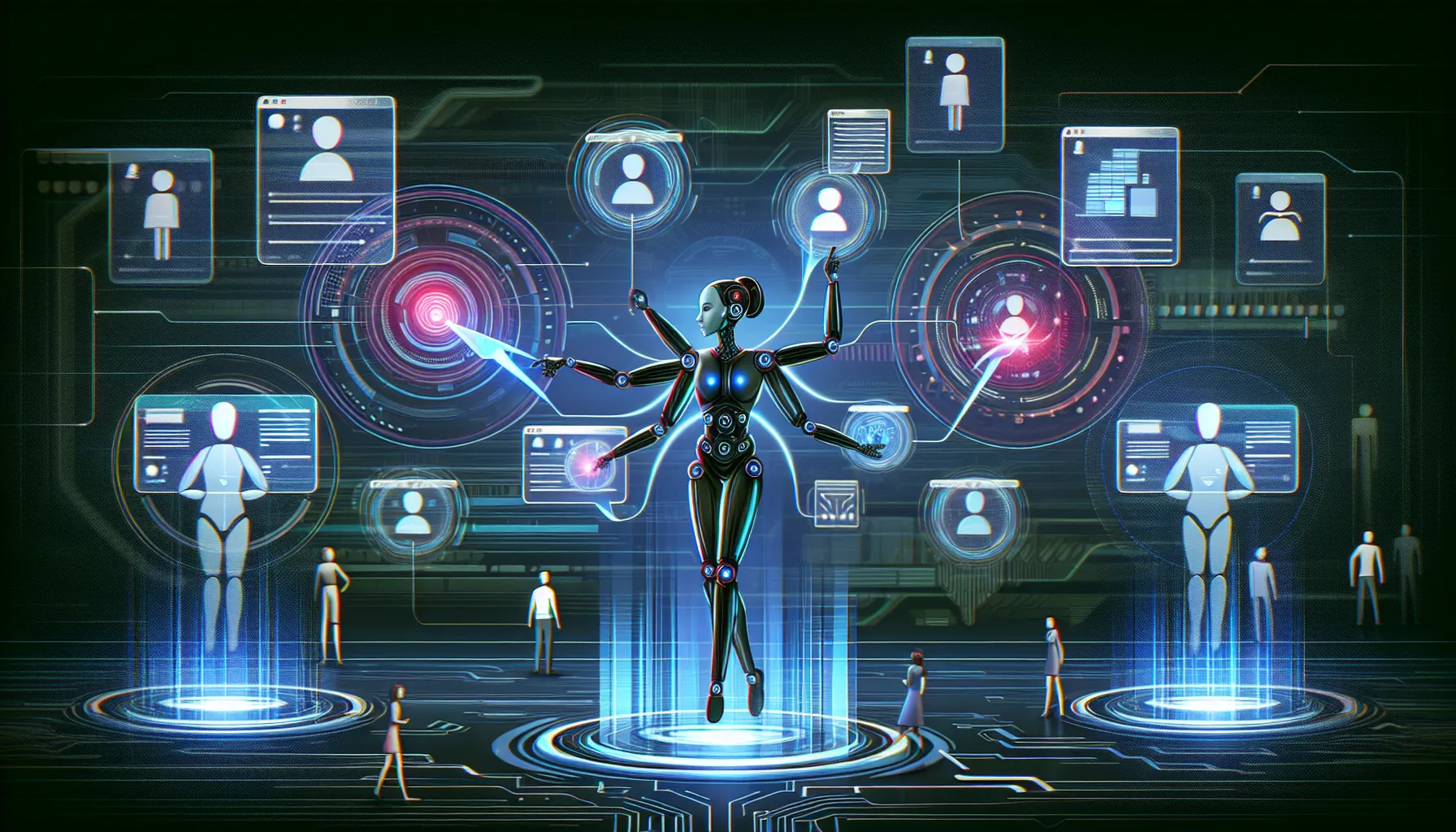
How Klarna's AI Assistant Replaced 700 Workers
Klarna's AI assistant handles 2.3M conversations monthly, doing work of 700 agents while cutting costs by millions. But what does this mean for jobs?
The AI Revolution Hits Customer Service
Picture this: you need help with a refund, but instead of waiting on hold for 20 minutes, you get instant help. That's what Klarna's AI assistant does. But here's the catch - it's doing the work of 700 human agents.
When you think about good customer service, AI probably isn't your first thought. Most of us have dealt with those clunky chatbots that can't understand simple questions. But Klarna might be changing that story.
The buy-now-pay-later company teamed up with OpenAI last year. The results? They're pretty eye-opening. Their AI assistant isn't just handling basic tasks - it's doing work that used to need hundreds of people.
What Klarna's AI Actually Does
In just one month, Klarna's AI assistant handled 2.3 million chat conversations. That's the same amount of work as 700 full-time customer service agents. But doing the job is one thing - doing it well is another.
Here's where it gets interesting. The AI didn't just replace human workers - it actually improved service. Repeat questions dropped by 25%. Response times got 9 minutes faster. And here's the kicker: customer satisfaction stayed exactly the same.
Think about that for a second. Customers got faster help and didn't even notice they weren't talking to humans. The AI works in over 35 languages through Klarna's app. It helps with refunds, gives financial advice, and handles most common questions.
"This launch marks a significant leap forward in Klarna's vision of a fully AI-powered financial assistant aimed at saving consumers time, worry and money," Klarna said in their announcement. They want to make banking more efficient and focused on what customers actually need.
But Klarna isn't getting rid of human agents completely. The AI handles simple stuff, while humans focus on complex problems. It's like having a smart filter that sorts easy questions from hard ones.
The Money Behind the AI
You might wonder: how much does this cost? When someone asked Klarna's CEO Sebastian Siemiatkowski on Twitter, he was pretty direct. The AI setup cost about $2 to $3 million.
That sounds like a lot of money. But here's the business side: Klarna expects this AI to boost their profits by $40 million. That's a pretty good return on investment. Spend $3 million, make $40 million more. Most companies would take that deal.
This fits into a bigger trend. Research shows AI-driven customer service could save companies up to $8 billion worldwide in 2024. The conversational AI market is growing fast too - from $10.7 billion in 2024 to $17.4 billion by 2025.
Klarna isn't alone in this space. Bank of America's AI assistant Erica has handled over 1 billion customer interactions since it launched. These numbers show that AI customer service isn't just a test anymore - it's becoming the norm.
The Job Displacement Question
Here's where things get uncomfortable. About two years ago, Klarna laid off around 700 employees. Sound familiar? That's the exact number of agents their AI now replaces.
The timing looks suspicious. In December 2023, Klarna announced a hiring freeze. They said AI was part of the reason. Now they're bragging about AI doing the work of 700 people. You can see why people are connecting the dots.
Klarna says the layoffs weren't related to their AI plans. A company rep, Filippa Bolz, told reporters that their customer service uses big global partners with over 650,000 employees total. When one company like Klarna needs less help, those agents just move to other companies.
But many people aren't buying this explanation. The 700 number feels too perfect to be a coincidence. It raises real questions about how companies use AI and what happens to the workers.
This touches on a bigger worry about AI and jobs. Dr. Jane Smith, an AI ethics researcher, says companies need to provide retraining programs for workers who lose jobs to AI. It's not enough to just say "they'll find other work."
What This Means for Other Companies
Klarna's success is making other companies take notice. If you can cut costs and improve service at the same time, why wouldn't you try AI?
But rolling out AI isn't simple. You need the right technology, good training data, and ways to handle complex situations. Klarna's AI uses advanced machine learning to understand customer questions in real-time. This helps it give accurate answers quickly.
The trend isn't just about replacing workers though. Many companies are looking at "AI co-bots" - AI that works with humans instead of replacing them. This approach might be smarter in the long run.
Think about it this way: AI is great at handling simple, repetitive tasks. Humans are better at understanding emotions, solving complex problems, and making judgment calls. The best customer service might use both.
The Customer Experience Side
Let's talk about what this means for you as a customer. Klarna's AI is available 24/7. No more waiting for business hours or sitting on hold. You get instant help in your preferred language.
The AI can handle most common requests right away. Need a refund? Done in minutes. Want to check your payment schedule? Instant answer. Have a question about fees? The AI knows all the details.
But what happens when you have a weird problem the AI can't solve? That's when human agents step in. The idea is that AI filters out the easy stuff, so humans can spend time on cases that actually need human thinking.
This could make customer service better overall. Instead of human agents rushing through simple questions to clear their queue, they can focus on helping customers with real problems.
The Bigger Picture for AI in Business
Klarna's story isn't just about customer service. It shows how AI is changing business operations across the board. Companies are finding that AI can handle routine tasks faster and cheaper than humans.
But this creates new challenges. How do you retrain workers whose jobs get automated? How do you keep the human touch in customer service? How do you handle the ethical questions around job displacement?
Some companies are being more thoughtful about this transition. They're using AI to help workers do their jobs better, not to replace them entirely. This might be a smarter approach in the long run.
The key is finding the right balance. AI is really good at certain things - processing information quickly, working 24/7, handling multiple languages. Humans are good at other things - understanding emotions, solving creative problems, making ethical decisions.
What Comes Next
Klarna's AI success is just the beginning. As AI gets better and cheaper, more companies will adopt similar systems. This could transform how we interact with businesses.
But it also means we need better plans for helping workers adapt. Companies that just replace people with AI might save money short-term, but they could face backlash from customers and regulators.
The companies that do this right will probably use AI to enhance human workers, not replace them. They'll invest in training programs and help people develop new skills that work well with AI.
For customers, this could mean faster, better service. For workers, it means needing to adapt and learn new skills. For companies, it means balancing efficiency gains with social responsibility.
Klarna's AI assistant shows what's possible when you combine good technology with smart implementation. But it also raises important questions about the future of work and how we handle the transition to an AI-powered economy.
The numbers are impressive - 2.3 million conversations handled, 25% fewer repeat questions, 9-minute faster responses. But behind those numbers are real questions about jobs, fairness, and what kind of future we're building.
Whether this is progress or a problem depends on how companies like Klarna handle the human side of the AI revolution. The technology is here. Now we need to figure out how to use it responsibly.
Share this article
Join the newsletter
Get the latest insights delivered to your inbox.