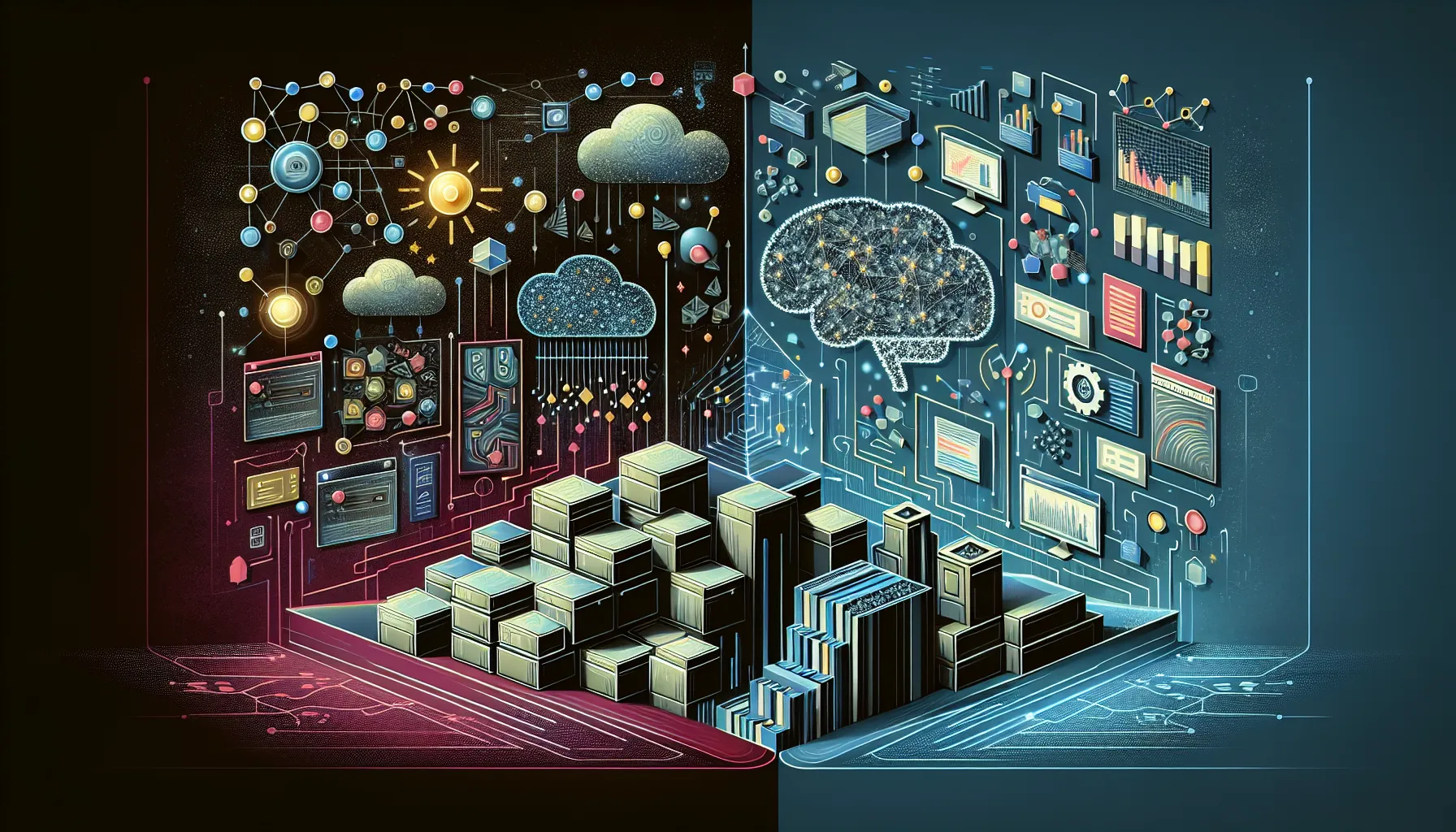
Why Smart Marketers Are Ditching Data Hoarding for AI
The era of collecting every data point is over. Here's how top marketers are shifting from data stockpiling to AI-powered intelligence.
Remember when marketers bragged about their massive data lakes? Those days are ending fast. While most companies still chase every click, scroll, and conversion metric, the smartest marketers are making a radical shift. They're not asking "how much data can we collect?" anymore. Instead, they're asking "how can AI turn our data into instant action?"
This isn't just another tech trend. It's a complete rethink of what data means in marketing. And if you're still playing by the old rules, you're already falling behind.
The Death of Data Hoarding
For years, marketers followed a simple rule: collect everything. Every website visit, email open, and social media interaction went straight into storage. The thinking was logical - you never know what insights might emerge from that data later.
This approach made sense when analysis took weeks and required specialized teams. You'd gather data for months, then spend more months trying to find patterns. By the time you got insights, market conditions had already shifted.
But AI has flipped this model completely. Modern AI systems don't need you to hoard data for future analysis. They need the right data, at the right time, in the right format. Quality beats quantity every single time.
Think of it this way: imagine you're trying to have a conversation with someone who has perfect memory but can only access it through a foggy window. That's essentially what happens when you feed AI systems poorly organized data. The intelligence is there, but it can't see clearly enough to help you.
How AI Actually Uses Your Marketing Data
Here's where things get interesting. AI doesn't work with your data the same way traditional analytics tools do. When you run a standard report, the system goes back to your database, pulls the relevant information, and shows you results. It's like having a really fast librarian who can find any book you need.
AI works differently. It's more like having a brilliant advisor who has read every book in the library and can instantly recall the important parts. But here's the catch - that advisor's memory isn't perfect. It's compressed and sometimes fuzzy.
This is why the old "collect everything" approach doesn't work with AI. You're not feeding a storage system anymore. You're training and supplementing an intelligence system that needs clean, relevant, and actionable information.
Consider how this plays out in email marketing. Traditional systems would track every possible metric - open rates, click rates, time spent reading, device used, and dozens more. An AI system cares less about having every metric and more about having the metrics that actually predict customer behavior.
The New Rules of AI-Ready Data
Smart marketers are discovering that AI-ready data follows completely different rules than traditional marketing data. Here's what's changing:
Focus on Behavioral Patterns, Not Individual Actions
Instead of tracking every single click, successful marketers focus on patterns that reveal customer intent. AI excels at spotting these patterns, but only when the data is organized around behaviors rather than isolated events.
For example, instead of storing "User clicked Product A at 2:47 PM," you'd focus on "User shows interest in Product Category B during afternoon browsing sessions." The AI can work with this pattern-based data much more effectively.
Real-Time Relevance Over Historical Completeness
Traditional marketing data strategies prioritized keeping everything "just in case." AI-driven marketing prioritizes having the most relevant information available instantly. This means being more selective about what you collect and how you store it.
Your AI systems need to know what's happening right now with your customers, not what happened six months ago. Fresh, relevant data beats comprehensive historical data every time.
Context Over Volume
AI systems work best when they understand the context around your data. This means connecting different data points in meaningful ways rather than just collecting more data points.
Instead of having separate databases for email engagement, website behavior, and purchase history, AI-ready data connects these elements into a coherent picture of customer journeys.
Building Your AI-First Data Strategy
Making this shift requires rethinking your entire approach to marketing data. Here's how forward-thinking marketers are restructuring their data strategies:
Start with Outcomes, Not Inputs
Traditional data strategies started with "what can we measure?" AI-first strategies start with "what decisions do we need to make?" This reverses your entire planning process.
Before collecting any data, define the specific marketing decisions you want AI to help with. Do you want to optimize email send times? Predict customer churn? Personalize product recommendations? Each outcome requires different types of data prepared in specific ways.
Design for Machine Learning, Not Human Analysis
Humans and machines process information differently. Data that's perfect for human analysts might be terrible for AI systems, and vice versa.
AI systems prefer structured, consistent data formats. They work better with numerical representations than text descriptions. They need clear relationships between different data elements. Your data architecture should prioritize these machine-friendly formats.
Implement Continuous Data Quality Checks
AI systems are incredibly sensitive to data quality issues. A small error in your data can throw off an entire campaign optimization. This means implementing automated quality checks that catch problems before they reach your AI systems.
Set up alerts for unusual patterns, missing data, or inconsistent formats. Your AI is only as good as the data it receives, so data quality becomes a competitive advantage.
The Competitive Edge of AI-Ready Marketing
Companies that master this transition gain significant advantages over competitors still stuck in data-hoarding mode. They can respond to market changes faster, personalize customer experiences more effectively, and optimize campaigns in real-time.
But the biggest advantage is speed. While traditional marketing teams spend weeks analyzing data to make decisions, AI-powered teams make those same decisions in minutes. This speed advantage compounds over time, creating an ever-widening gap between AI-ready marketers and everyone else.
The transition isn't easy. It requires changing established processes, retraining teams, and often rebuilding data infrastructure. But the companies making this shift now are positioning themselves to dominate their markets as AI becomes the standard for marketing decision-making.
Your Next Steps
The shift from data hoarding to AI-powered intelligence isn't coming - it's already here. The question isn't whether to make this transition, but how quickly you can adapt your marketing data strategy to this new reality.
Start by auditing your current data collection practices. Identify what you're collecting that doesn't directly support decision-making. Then, focus on the data that can actually improve your marketing outcomes when processed by AI systems.
Remember, this isn't about having less data - it's about having smarter data. The marketers who understand this distinction will thrive in the AI-powered future of marketing. Those who don't will find themselves drowning in data while their competitors race ahead with intelligence.
Share this article
Join the newsletter
Get the latest insights delivered to your inbox.