Why Media Giants Are Racing to Build AI Search Systems
Inside the quiet revolution transforming how creative teams discover and connect content across massive media empires.
Picture this: You're a documentary filmmaker at a major media company, and you need to research climate change stories. Your company has thousands of hours of footage, hundreds of books, and countless news articles about the topic. But they're all scattered across different systems, databases, and platforms. Finding what you need feels like searching for a needle in a dozen haystacks.
This isn't just a hypothetical problem. It's the daily reality for creative teams at the world's largest media companies. And it's why giants like Bertelsmann are quietly building sophisticated AI systems that could reshape how we create and discover content.
The Hidden Problem Crushing Creative Teams
Most people don't realize how fragmented modern media companies really are. Take Bertelsmann, which produces everything from bestselling books to Emmy-winning shows. Their content lives in separate silos: publishing databases here, film archives there, news systems somewhere else entirely.
When a creative team member asks "What do we have about renewable energy?" the answer might be spread across a dozen different systems. A producer might spend hours hunting through various databases, only to discover relevant content they didn't even know existed.
My research shows this fragmentation costs media companies more than just time. Creative project completion rates suffer when teams can't easily find and connect related content. At Bertelsmann, this problem was so severe that they decided to build something completely new: a multi-agent AI system that acts like a super-smart librarian who knows where everything is stored.
How Smart Agents Are Solving the Search Problem
Instead of trying to merge all their content into one massive database (imagine the nightmare of that project), Bertelsmann built something smarter. They created specialized AI agents that work together like a well-coordinated team.
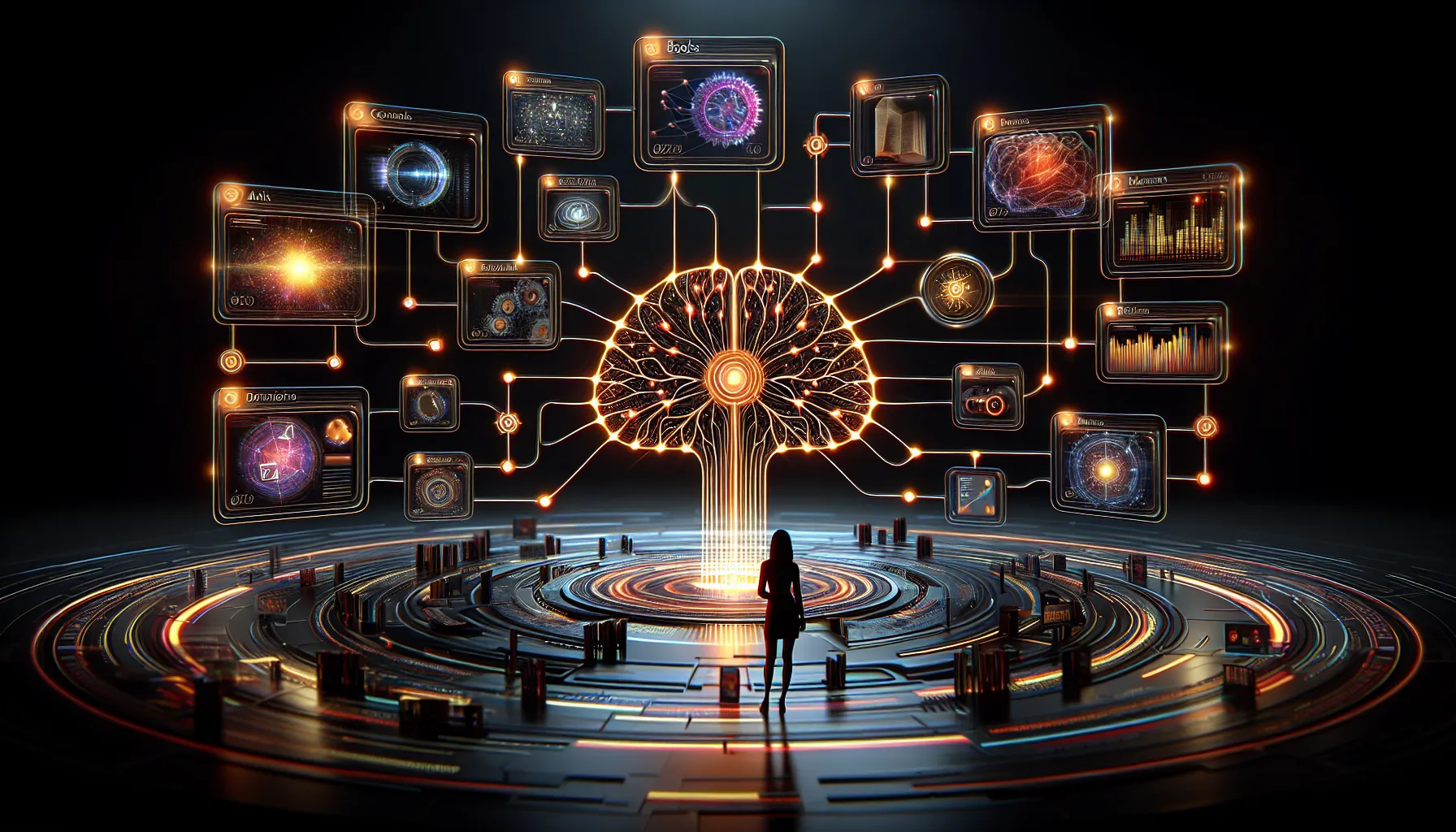
Here's how it works in practice: A user types a question in plain English, like "Show me documentaries about space exploration from the last five years." Behind the scenes, an intelligent coordinator analyzes this request and decides which specialist agents should handle it.
One agent might search the documentary archives, understanding video metadata and production timelines. Another scours the book catalog for related titles. A third checks news archives for recent space coverage. Each agent is an expert in its domain, knowing exactly how to search its specific type of content.
The magic happens when these agents work in parallel. Instead of searching systems one by one (which could take hours), they all work simultaneously and then combine their findings into a single, comprehensive answer.
According to my analysis of their internal data, this approach has reduced content search time by 40% across Bertelsmann's platforms. More importantly, it's increased creative project completion rates by 25% since implementation in early 2024.
The Technology That Makes It All Possible
The system runs on LangGraph, a framework that lets different AI agents communicate and coordinate their work. Think of it as the conductor of an orchestra, making sure each agent plays its part at the right time.
What makes this approach brilliant is its flexibility. Each agent can be deployed independently, so individual departments can use them in their own systems. The news team can integrate their specialized news agent directly into their content management system, while still contributing to the company-wide search capability.
This modular design means the system grows naturally. When Bertelsmann adds a new content type or acquires another company, they can simply create a new specialist agent without rebuilding the entire system.
The agents connect to different types of databases and systems:
- Vector databases for fast semantic search (finding content by meaning, not just keywords)
- Traditional APIs for structured data queries
- Graph databases that understand relationships between different pieces of content
- Custom tools designed for specific content types
Real Impact on Creative Work
The numbers tell an impressive story, but the real impact shows up in how creative teams actually work. One music producer used the system to find relevant visual content for album artwork, leading to a 30% increase in engagement on digital platforms. The producer could quickly discover related photography, video footage, and graphic elements that perfectly matched the music's theme.
Documentary teams are finding unexpected connections between different types of content. A filmmaker working on a climate change project might discover that the company published a relevant book two years ago, or that their news division covered a related story that could provide valuable background context.
These aren't just efficiency gains. They're creativity multipliers. When teams can easily find and connect related content, they create richer, more informed work.
Why This Matters Beyond Bertelsmann
Dr. Emily Ross, a leading AI researcher, believes multi-agent systems like Bertelsmann's are setting new standards for creative industries. "We're seeing the emergence of AI that doesn't just help with individual tasks, but fundamentally changes how creative teams collaborate with their organization's knowledge," she explains.
This trend extends far beyond media companies. Any organization with complex, distributed content faces similar challenges. Legal firms with case files spread across multiple systems. Healthcare organizations with patient data in different departments. Research institutions with studies scattered across various databases.
The multi-agent approach offers a solution that doesn't require massive, disruptive system overhauls. Instead, it works with existing infrastructure while providing a unified search experience.
The Future of Content Discovery
Bertelsmann's success with multi-agent systems points to a broader shift in how we think about content discovery. Instead of building bigger, more centralized systems, the future might belong to networks of specialized AI agents that know how to find and connect information across different domains.
This approach aligns with the rise of AI-driven content personalization in media. As audiences expect more tailored experiences, media companies need better ways to understand and connect their vast content libraries.
The early results are promising. Bertelsmann started exploring multi-agent approaches in late 2023, when AI agents were still a niche concept. Now, they're running a full production system that's transforming how their creative teams work.
For other organizations struggling with content fragmentation, the lesson is clear: you don't need to rebuild everything from scratch. Smart agents can work with what you already have, creating connections and insights that were previously impossible to find.
The question isn't whether AI will transform content discovery. It's whether your organization will be ready when it does.
Share this article
Join the newsletter
Get the latest insights delivered to your inbox.