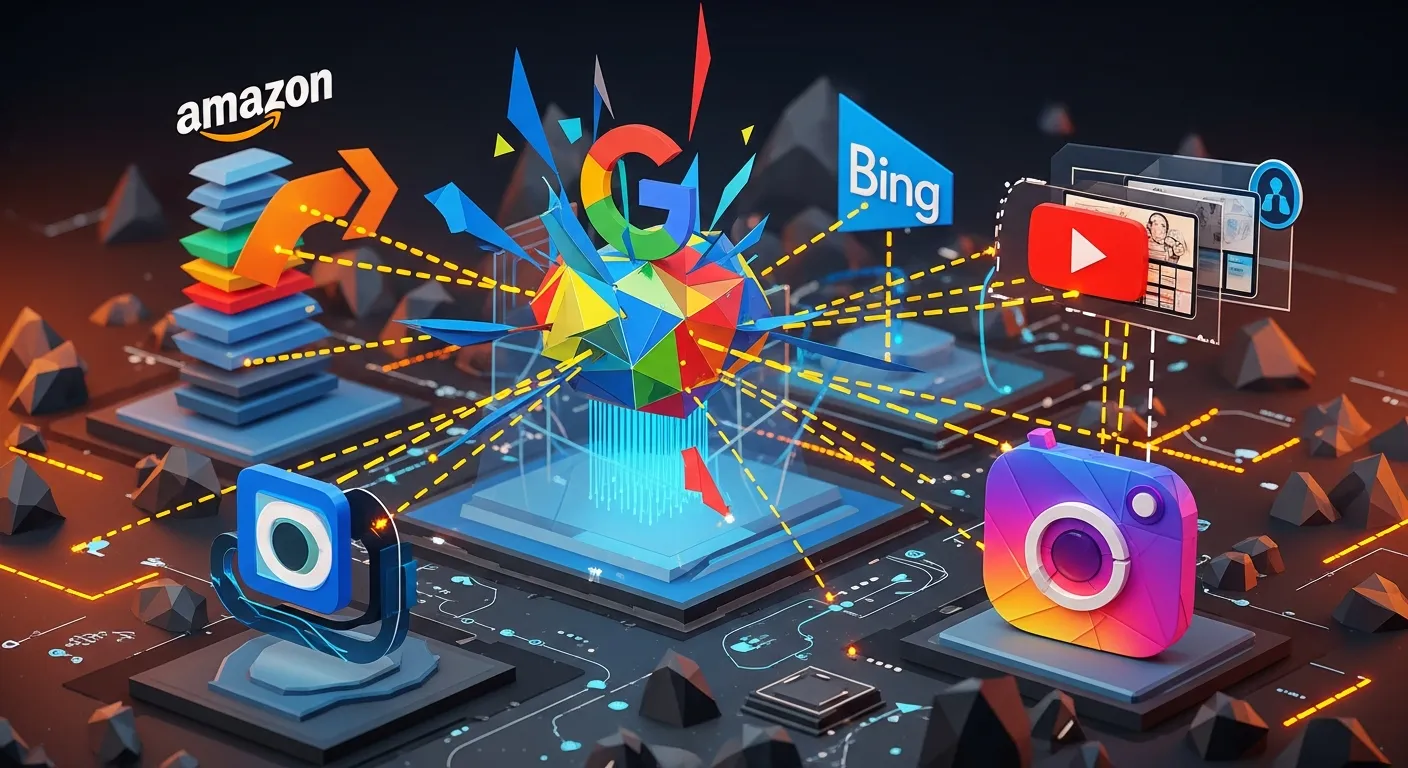
Why Your Search Strategy Is Missing 26% of the Market
Most marketers focus only on Google, but search behavior spans dozens of platforms. Here's where your audience is really looking for answers.
Picture this: you've spent months perfecting your Google SEO strategy. Your rankings look great, your traffic is steady, and you're feeling confident about your search presence. But what if you're only reaching three-quarters of your potential audience?
The way people search for information has quietly transformed. While we've been laser-focused on Google rankings and ChatGPT optimization, our audiences have been spreading their search behavior across dozens of platforms we barely think about.
It's time to expand our definition of search marketing beyond the obvious players.
The Hidden Search Ecosystem
When someone needs to find something online, they don't always start with Google. They might head straight to Amazon for product research, scroll through Instagram for restaurant recommendations, or check YouTube for how-to guides.
Each of these interactions is fundamentally a search behavior. Someone has a question or need, they enter a query, and they expect relevant results. Yet most marketing teams treat these platforms as separate channels rather than parts of a unified search ecosystem.
This fragmented approach means missing opportunities where your audience is actively looking for solutions you provide.
Platform-Specific Search Behaviors
Different platforms attract different types of searches. Amazon dominates product discovery and comparison shopping. YouTube owns the tutorial and entertainment search space. Instagram has become a visual search engine for lifestyle and local businesses.
Understanding these nuances helps you meet customers where they naturally go for specific types of information. Someone researching a major purchase might start on Google but move to Amazon for reviews and pricing. A person learning a new skill might search YouTube directly rather than filtering through Google's video results.
The Real Numbers Behind Search Distribution
Recent analysis of search behavior across major platforms reveals some surprising patterns. Google maintains a dominant position, handling roughly three-quarters of desktop search activity. But that remaining quarter represents millions of searches happening elsewhere.
Amazon captures a significant portion of this non-Google search volume, particularly for product-related queries. YouTube follows closely, especially for educational and entertainment searches. Even traditional competitors like Bing maintain meaningful search volume that many marketers ignore.
What's particularly interesting is how AI tools like ChatGPT, despite massive media attention, represent a smaller slice of actual search behavior than platforms like Amazon or YouTube. This suggests the AI search revolution, while real, is happening more gradually than headlines suggest.
Commerce Search Dominance
E-commerce platforms collectively handle about one in ten searches. This makes sense when you consider how shopping behavior has evolved. People often skip general search engines when they know they want to buy something, going directly to Amazon, eBay, or retailer websites.
This shift has huge implications for businesses selling products. Optimizing only for Google means missing customers who've already moved past the research phase and are ready to purchase.
Social Media as Search Infrastructure
Social platforms now function as search engines for specific types of content. Instagram serves as a visual discovery tool for restaurants, fashion, and local services. TikTok has become a go-to source for quick tutorials and product recommendations. LinkedIn functions as a professional search engine for career and business information.
These platforms don't just host content – they actively help users discover relevant information through sophisticated algorithms and search features. Someone looking for a local coffee shop might search Instagram hashtags rather than Google Maps. A person researching career advice might search LinkedIn posts instead of traditional websites.
The Visual Search Revolution
Visual search capabilities are reshaping how people find information. Pinterest allows users to search using images rather than keywords. Instagram's visual discovery features help people find products and services through photos. Even Google has enhanced its visual search tools.
This trend particularly impacts businesses in visual industries like fashion, food, travel, and home decor. Your content strategy needs to account for how visual search algorithms understand and categorize images.
Practical Implications for Marketers
Understanding the distributed nature of search behavior changes how you should approach content and optimization strategies. Instead of putting all your effort into Google rankings, consider where your specific audience naturally searches for your type of content or product.
Start by mapping your customer journey across different platforms. Where do people first hear about solutions like yours? Where do they go to research options? Which platforms influence their final decisions?
Platform-Specific Optimization
Each platform has its own optimization requirements. Amazon success depends on product listings, reviews, and pricing strategies. YouTube requires video optimization for both the platform's algorithm and Google's video search results. Instagram needs visual content optimized for hashtag discovery and the Explore page.
Don't try to be everywhere at once. Focus on the platforms where your audience naturally searches for your type of content. A B2B software company might prioritize LinkedIn and YouTube over Instagram. A local restaurant should focus on Instagram and Google My Business over LinkedIn.
Content Strategy Across Platforms
Your content needs to work differently on each platform while maintaining consistent messaging. YouTube content should be educational and engaging. Instagram content should be visually appealing and locally relevant. LinkedIn content should be professional and industry-focused.
Consider how the same core message can be adapted for different search behaviors. A guide to choosing software might become a detailed blog post for Google, a video series for YouTube, and infographic posts for LinkedIn.
Measuring Success Across the Search Ecosystem
Traditional search metrics focus heavily on Google performance. But comprehensive search marketing requires tracking performance across multiple platforms. This means monitoring Amazon search rankings alongside Google positions, tracking Instagram hashtag performance, and measuring YouTube video discovery.
Set up analytics to understand how different platforms contribute to your overall goals. Someone might discover you on Instagram, research your company on Google, and finally convert through a YouTube video. Attribution becomes more complex but more accurate.
Budget Allocation Strategies
Distribute your search marketing budget based on where your audience actually searches, not just where it's easiest to measure results. If significant portions of your target market use Amazon for product research, allocate budget to Amazon advertising and optimization.
Consider the lifetime value and conversion rates from different platforms. YouTube traffic might convert at lower rates than Google, but if those customers have higher lifetime value, the platform deserves more investment.
The search landscape will continue evolving as new platforms emerge and user behaviors shift. Voice search, AI assistants, and augmented reality will create new search opportunities. Staying ahead means thinking broadly about where and how people seek information.
Success in this distributed search world requires flexibility and continuous learning. Monitor how your audience's search behavior changes over time. Test new platforms as they gain traction. Always be ready to adjust your strategy as the ecosystem evolves.
The companies that thrive will be those that meet customers wherever they're searching, not just where it's convenient to optimize. Your audience is already searching everywhere – it's time your strategy caught up.
Share this article
Join the newsletter
Get the latest insights delivered to your inbox.