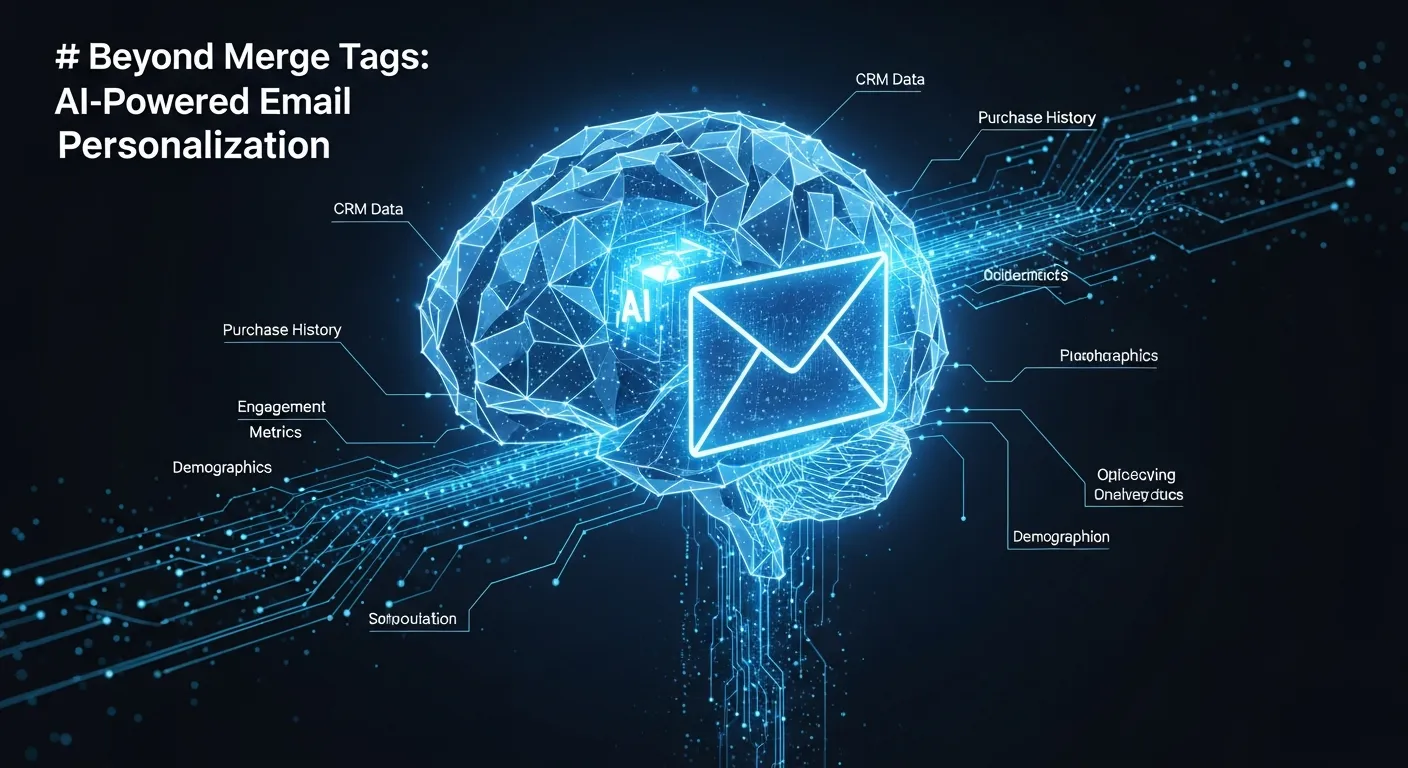
Beyond Basic Merge Tags: Smart Email AI That Actually Converts
Stop sending generic emails with just names inserted. Learn how smart AI creates emails that feel personally written for each subscriber and drive real results.
Picture this: you get an email that mentions your company by name, references a blog post you read last week, and offers exactly what you need right now. It feels like someone wrote it just for you. That's the power of smart email AI - and it's changing how businesses connect with their audiences.
Most companies still think personalization means adding "Hi [First Name]" to their emails. But that's like putting a Band-Aid on a broken bone. Real email AI goes way deeper. It looks at how people behave, what they care about, and when they're most likely to pay attention.
The results speak for themselves. Companies using smart email AI see their open rates jump by 30% and click-through rates increase by 50%. More importantly, these emails actually turn readers into customers.
What Makes Email AI Actually Smart
Smart email AI isn't just a fancy name generator. It's like having a personal assistant who knows everything about your subscribers and can write emails that feel human.
Think of it this way: traditional email tools are like paint-by-numbers kits. You follow a template and fill in the blanks. Smart AI is more like having an artist who studies each person's preferences and creates something unique for them.
The magic happens in two ways. First, the AI looks at data - what pages someone visited, how they found your website, what emails they opened before. Second, it uses this information to write content that matches where that person is in their buying journey.
For example, someone who just signed up for your newsletter gets a different email than someone who's been reading your content for months and just checked your pricing page. The AI knows the difference and adjusts accordingly.
The Two Brains Behind Smart Email AI
Smart email AI works because it combines two different types of artificial intelligence. Think of them as the creative brain and the analytical brain.
The creative brain writes the actual emails. It can craft subject lines, write body text, and create calls to action that match each subscriber's interests. Instead of you writing ten different versions of the same email, the AI creates variations automatically.
The analytical brain figures out the strategy. It decides who should get which email and when to send it. This brain looks at patterns - like when someone usually opens emails or what type of content they engage with most.
When these two brains work together, you get emails that are both well-written and strategically timed. It's like having a copywriter and a data analyst working on every single email you send.
Building Your Email AI Foundation
Before you can use smart email AI effectively, you need to get your house in order. It's like trying to cook a gourmet meal - you need quality ingredients and a clean kitchen.
Your customer data is the most important ingredient. The AI needs to know who your subscribers are, what they've done on your website, and how they've interacted with your previous emails. If this information is scattered across different tools or filled with errors, your AI will make bad decisions.
Start by cleaning up your contact database. Make sure you know which stage each subscriber is in - are they just learning about your industry, comparing solutions, or ready to buy? This information helps the AI choose the right tone and message for each person.
The Data Your AI Needs to Succeed
Smart email AI thrives on specific types of information. The more context it has, the better it can personalize each message.
Behavioral data tells the AI what people actually do. This includes which pages they visit, how long they stay, what they download, and which emails they open. Someone who spends ten minutes reading your pricing page is very different from someone who just glances at your homepage.
Demographic and company information helps the AI understand context. A small business owner has different needs than an enterprise executive. The AI can adjust the language, examples, and offers based on these differences.
Engagement history shows how people prefer to communicate. Some subscribers love detailed emails with lots of information. Others want short, punchy messages. The AI learns these preferences over time and adapts accordingly.
Setting Up Smart Boundaries
With great power comes great responsibility. Smart email AI can access lots of personal information about your subscribers, so you need to use it ethically.
Set clear rules about what information the AI can use. Just because you know someone's job title doesn't mean you should reference it in every email. Use personal details sparingly and only when they add real value.
Respect privacy preferences and unsubscribe requests immediately. The AI should never override someone's explicit wishes about how they want to be contacted.
Keep your email list healthy by removing inactive subscribers and honoring suppression lists. A smaller, engaged list will always perform better than a large, disinterested one.
Creating Emails That Feel Personal at Scale
The real magic of smart email AI happens when you can create thousands of personalized emails without writing each one individually. It's like having a personal letter writer for every subscriber.
Start by grouping your subscribers into smart segments based on their behavior and characteristics. Instead of just dividing people by industry or location, look at what they actually do. Group people who visited your pricing page separately from those who downloaded your free guide.
These behavioral segments are gold for AI personalization. Someone who's been researching solutions for weeks needs a different message than someone who just discovered they have a problem.
Dynamic Content That Actually Adapts
Smart email AI goes beyond changing names in subject lines. It can swap entire sections of your emails based on who's reading them.
Imagine sending one email campaign where the main benefit changes based on each person's industry, the case study matches their company size, and the call to action reflects where they are in the buying process. That's what dynamic content can do.
The AI looks at each subscriber's profile and chooses the most relevant version of each email section. A startup founder might see a case study about rapid growth, while an enterprise manager sees one about scaling operations.
This approach works because it addresses each person's specific situation without you having to write separate campaigns for every possible combination of characteristics.
AI-Generated Content That Sounds Human
The best AI-generated emails don't sound like they came from a robot. They read like a knowledgeable colleague wrote them specifically for each recipient.
Train your AI by giving it clear instructions about your brand voice and the specific goals for each campaign. Instead of just saying "write an email about our new feature," tell it to "write a friendly email explaining how this feature solves the time management problems that busy managers face."
The AI can then create variations of this message that emphasize different benefits for different segments. Managers might hear about time savings, while executives hear about team productivity improvements.
Always review AI-generated content before sending. The AI is smart, but it doesn't understand your business context as well as you do. Look for opportunities to add specific examples or adjust the tone to better match your brand.
Timing and Subject Lines That Get Opened
Even the most personalized email won't work if nobody opens it. Smart AI can optimize both when your emails arrive and what the subject line says to maximize opens.
Traditional email marketing sends everyone the same message at the same time. But people check their email at different times of day. Someone might be most responsive at 8 AM, while another person doesn't look at email until after lunch.
Smart AI learns these patterns for each subscriber. It notices that Sarah always opens emails on Tuesday mornings, while Mike prefers Thursday afternoons. Then it schedules emails to arrive when each person is most likely to see them.
Subject Lines That Speak to Each Person
Subject lines are like headlines - they need to grab attention in just a few words. AI can generate multiple subject line options and test them automatically to see what works best for different types of subscribers.
The AI considers what it knows about each person when writing subject lines. Someone who's been evaluating solutions for months might respond to "Ready to make your decision?" while a new subscriber might prefer "Here's what you need to know."
Smart AI can also test different approaches - urgency versus curiosity, benefits versus features, questions versus statements. Over time, it learns what resonates with each segment and adjusts accordingly.
Don't rely on the AI completely for subject lines. Use its suggestions as starting points, then refine them based on your knowledge of your audience and current events in your industry.
Measuring Success and Avoiding Common Pitfalls
Smart email AI gives you more data than traditional email marketing, but you need to know which metrics actually matter. Opens and clicks are just the beginning - the real question is whether your emails drive business results.
Track how your AI-personalized emails affect the entire customer journey. Do people who receive personalized emails visit your website more often? Do they request demos or download resources? Most importantly, do they eventually become customers?
Set up proper attribution so you can see which email touchpoints contribute to conversions. Someone might not click on your first personalized email but remember your brand when they're ready to buy three months later.
Common Mistakes That Kill Performance
Many companies get excited about AI personalization and go overboard. They reference every piece of data they have about each subscriber, making emails feel creepy instead of helpful.
Use personalization to add value, not to show off how much you know. Mentioning that someone visited your pricing page is useful if you're offering a demo. Mentioning it just to prove you're watching them is weird.
Another common mistake is trusting the AI too much without human oversight. AI can write compelling content, but it doesn't understand context the way humans do. Always review AI-generated emails for accuracy and appropriateness before sending.
Don't forget about email deliverability. Highly personalized emails can sometimes trigger spam filters if they're not properly authenticated. Make sure your sending infrastructure can handle AI-generated content without hurting your reputation.
Building Trust Through Transparency
Smart email AI works best when subscribers trust you with their information. Be transparent about how you use their data and give them control over their preferences.
Include clear unsubscribe options in every email, and honor them immediately. Let people choose how often they want to hear from you and what topics interest them most.
Use personalization to provide value, not to manipulate. If someone downloaded a guide about project management, send them related resources that actually help with project management. Don't just use that information to push your product.
The Future of Smart Email Relationships
Smart email AI is just getting started. As the technology improves, emails will become even more conversational and helpful. Think of it as moving from broadcast television to personal conversations.
The companies that succeed will be those that use AI to build genuine relationships with their subscribers. They'll focus on providing value and solving problems, not just selling products.
Start experimenting with smart email AI now, but do it thoughtfully. Begin with simple personalization based on clear behavioral signals. As you learn what works for your audience, you can add more sophisticated features.
Remember that technology is just a tool. The most important part of email marketing is still understanding your audience and providing them with information they actually want. Smart AI just makes it easier to do that at scale.
Your subscribers don't care whether a human or an AI wrote their email. They care whether it helps them solve their problems and move forward with their goals. Focus on that, and the technology will take care of the rest.
Share this article
Join the newsletter
Get the latest insights delivered to your inbox.