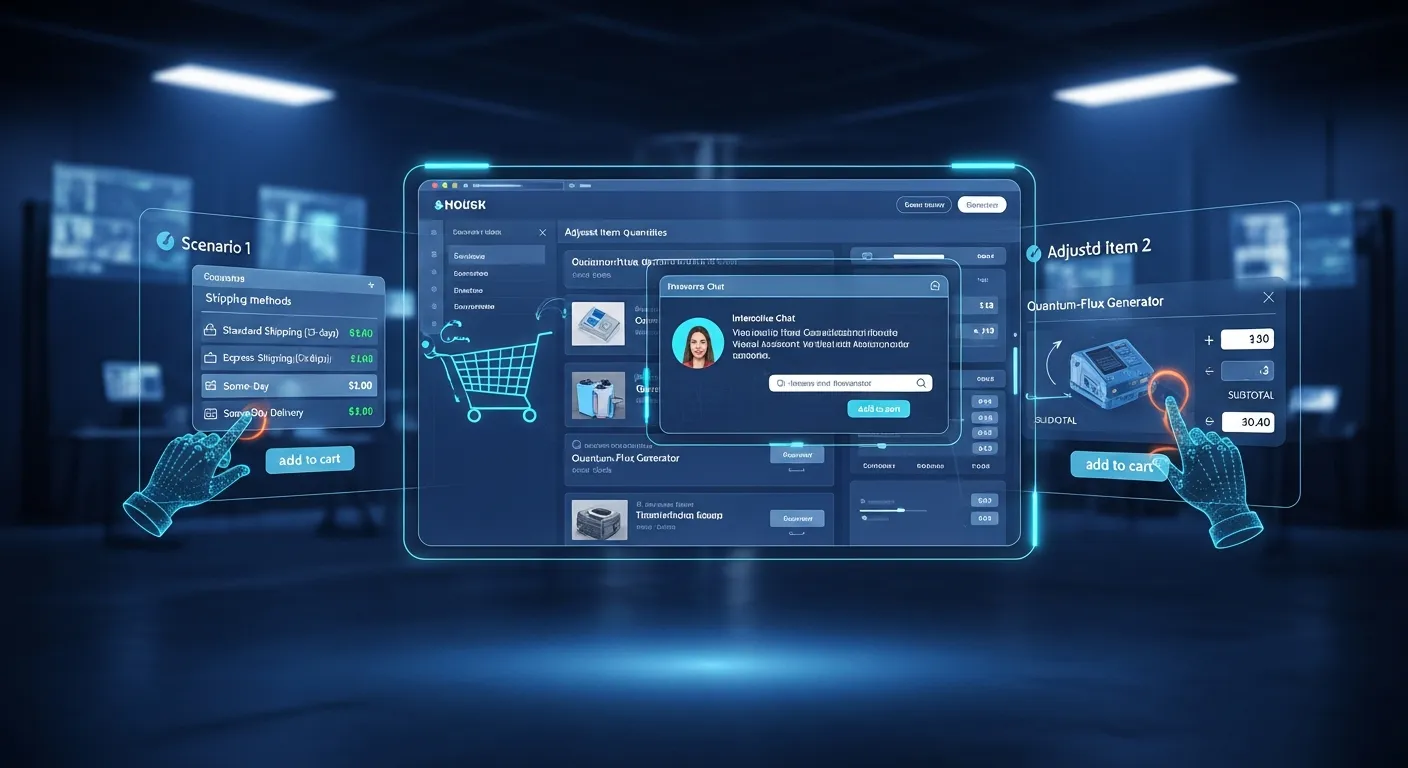
Why 'We Already Tested It' Is Never Enough
A website that passes every demo can still fail every real customer. Here's what most teams miss when they think QA means 'checking the happy path.'
The Gap Between a Demo and Reality
Picture this. A team spends months building an ecommerce site. The demos go smoothly. The client nods along. Everyone agrees it looks great. Then a QA specialist comes in for a two-week pre-launch check — and finds over 40 bugs on day one.
More than half of those bugs were serious enough to stop a launch cold.
How does that happen? How can a product look polished in a demo and fall apart the moment a real customer touches it? The answer isn't complicated. It's just uncomfortable.
Most teams test what they expect to happen. Real customers do what no one expected.
The Happy Path Problem
Every product has what testers call a "happy path." It's the perfect route through your app or website. The user does exactly what you designed them to do. Nothing goes sideways. The demo looks flawless.
The trouble is, real customers don't walk the happy path. They wander. They double back. They change their minds halfway through checkout. They tap the wrong button, go back, and try again.
Consider what a typical online shopper actually does. They add three items, then remove one. They switch from standard shipping to overnight after they've already entered payment details. They filter products by two or three categories at once. They start on a laptop and finish on their phone.
Each of those small, ordinary actions is a potential breaking point. And most of them never show up in a controlled demo.
The bugs that hurt businesses most aren't the exotic ones. They're the ones hiding inside everyday customer behavior that nobody thought to test.
What Real-World Testing Uncovers
Think about the kinds of checkout issues that only appear when someone acts like an actual shopper. Shipping costs that don't update when you switch delivery options. Quantity changes that don't recalculate the total — meaning a customer could buy five items for the price of one. Subscription upgrade flows that throw errors or charge the wrong amount. Filters that work fine alone but return zero results when combined.
None of these require unusual behavior to trigger. They're all things shoppers do every single day.
Mobile is its own category of surprises. Buttons that display perfectly on a desktop can vanish on a smaller screen. Entire checkout flows can become impossible to complete on a phone. And since a large share of online shopping happens on mobile devices, this isn't a minor edge case. It's a direct hit to revenue.
The point isn't to shame development teams. Developers are experts at building features. They test to confirm those features work as designed. That's a different job than testing to confirm a feature survives contact with unpredictable humans.
Why "We Tested It" Doesn't Mean What You Think
When a client says "we already tested it," they're usually telling the truth. The developers tested it. The project manager clicked through it. The stakeholders watched the demo. All of that happened.
But there's a big difference between proving a product can work and proving it will work for hundreds of real people doing unexpected things.
Internal testing has built-in blind spots. When you build something, you know how it's supposed to work. That knowledge shapes how you test it. You unconsciously avoid the steps that would break it, because your brain already knows the "right" way to use it.
An outside tester — or better yet, an actual user — brings none of that context. They'll click the thing you never expected them to click. They'll enter data in a format your form didn't anticipate. They'll navigate backwards when your flow assumed they'd only go forward.
This is why QA done right isn't just a checklist. It's an act of deliberate imagination. You're asking yourself: what would someone do if they had no idea how this was built?
The Real Cost of Skipping Thorough QA
Some teams treat QA as a formality. A box to check before launch. The thinking goes: if something breaks after launch, we'll fix it then.
That logic sounds practical. It isn't.
When a checkout flow breaks in production, real orders fail. Real customers get frustrated and leave. Some of them don't come back. Support tickets pile up. Your team scrambles to patch issues while also handling normal work. And every hour the bug sits unfixed, it's costing you sales.
The harder cost is trust. A customer who hits a broken checkout once might give you another shot. A customer who gets charged the wrong amount, or whose subscription upgrade fails, or who can't check out on their phone — that customer tells people. Trust built over years can erode surprisingly fast when the product experience falls apart.
Fixing bugs before launch is always cheaper than fixing them after. Not just in developer hours, but in customer relationships and brand reputation.
How to Test Like a Real Customer
So what does good QA actually look like? It starts with breaking out of the happy path on purpose.
Test every major flow in reverse. Go back when the design assumes you'll go forward. Skip steps. Return to steps you already completed. Change your mind mid-process and see what happens.
Combine things that were probably tested separately. Use multiple filters at once. Apply a coupon code while also switching shipping methods. Add items, remove items, add them again. The bugs that survive individual testing often appear when features interact with each other.
Test on real devices, not just browser simulators. A phone in your hand behaves differently than a browser window resized to phone dimensions. Buttons that seem tappable in a simulator can be frustratingly small on an actual screen.
Test with bad data, not just good data. Enter an address with an apartment number. Use a name with an apostrophe. Add a product to your cart and then let the session sit idle for a while. Real users don't always fill out forms the way designers intended.
And critically — test again after every fix. Every patch creates the possibility of a new problem somewhere else. A fix to the shipping calculator might inadvertently affect how discounts are applied. A change to the mobile layout might break something on tablet. QA isn't a single pass. It's an ongoing process of validation.
Building a Culture That Values QA
The deeper issue isn't just methodology. It's mindset. Many teams see QA as the last step before launch — a final check before the real work is done. That framing sets everyone up for problems.
QA works best when it's woven into the process, not bolted on at the end. When developers write a feature, someone should be asking "how would a confused customer misuse this?" before the code ships. When a designer creates a flow, someone should walk through it as a first-time user with no instructions.
This doesn't mean every team needs a dedicated QA specialist on staff. But it does mean someone needs to take on the role of the skeptical outsider — the person whose job is to assume nothing works until proven otherwise.
The teams that do this well tend to launch with fewer surprises. Not because they're smarter or luckier, but because they built the habit of asking uncomfortable questions early enough to act on the answers.
What a Two-Week Audit Can Teach You
The story of a QA specialist finding 40+ bugs in a single day isn't a horror story about a bad development team. It's a story about what happens when internal testing is the only testing.
The development team wasn't incompetent. The demos weren't fake. The product genuinely worked — under ideal conditions, with people who knew exactly how it was supposed to behave.
What it hadn't survived was contact with reality. And reality, in ecommerce, means thousands of customers doing thousands of slightly different things, on different devices, in different orders, with different expectations.
A thorough QA audit isn't a sign that something went wrong. It's a sign that someone cared enough to find out what would go wrong before customers did. That's not a cost. That's an investment in every order, every customer relationship, and every dollar of revenue that would otherwise have slipped through a broken checkout flow.
The next time someone says "we already tested it," the right follow-up question is simple: did you test it like a real customer would use it? Because that's the only test that actually counts.
Share this article
Join the newsletter
Get the latest insights delivered to your inbox.